


Heat, humidity and long sunny days change what the skin needs: the face shines more, sweat builds up and sunscreen has to be reapplied during the day. There is no need to rebuild your routine from scratch in summer; making textures lighter, moving acids to the evening and planning reapplication are enough.
In short: A summer routine gets simpler: gentle cleansing morning and evening, an extra wash after heavy sweating, a light layer of hydration instead of a heavy cream, and sunscreen as the last step of the morning. When you are outdoors, sunscreen is reapplied at least every two hours, and more often when you are sweating. Products containing AHAs are moved to the evening. AHAs can increase the skin's sensitivity to the sun: apply sunscreen every morning while using this product and for one week after you stop.
Why does skin shine more in summer?
Hot, humid weather can make skin look oilier. A review on oily skin reports that the level of oiliness can vary with diet, age, sex and ethnicity, and also with hot, humid climates. Sweat on the surface and products layered on top of one another also add to a shiny look; this is why the first decision in summer is to reduce the number of layers.
What stays, what is cut back and what is added in a summer routine?
The basic steps stay the same; what changes is texture, the number of layers and reapplication during the day. The routine builder works out your basic morning and evening order step by step for your skin type.
| Step | Summer decision | s'hevec option |
|---|---|---|
| Cleansing | Stays: morning and evening; an extra wash after heavy sweating | Magic Foam Party |
| Hydration and serums | Cut back: instead of several layered serums and a heavy cream, a hydrating serum and a thin, water-based cream | Hydra Back Baby, then Any Time Of Day |
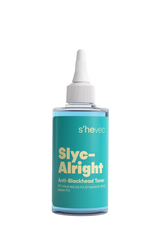
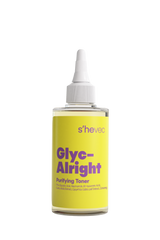
| Acid products | Moved to the evening; frequency stays as on the label | Glyc-Alright, Red Of Love |
| Sun protection | Stays as the last step of the morning | Matte's Up? SPF 50+ for oily and combination skin |
| Reapplication during the day | Added: at least every two hours outdoors | The sunscreen you applied in the morning: Matte's Up?, Just Protected From Sun or Crush On Pink |
Magic Foam Party Foaming Face Cleanser contains 2% niacinamide with CICA and PHA; it is SLS-free and paraben-free. The evening wash clears away the sweat and sunscreen residue that build up during the day. Hydra Back Baby 8D Hyaluronic Acid Hydrating Serum contains 2% 8D hyaluronic acid and 1.2% Pentavitin (saccharide isomerate); apply 3–4 drops to slightly damp skin. It does not replace a moisturiser; the water-based, silicone-free Any Time Of Day is applied thinly on top. When your face starts to shine towards midday, skipping the cream step is tempting; what should change in summer is not the hydration step itself but its texture.
Can you use acid products in summer?
Yes, but in the evening and at the frequency on the label. AHAs can increase the skin's sensitivity to the sun: apply sunscreen every morning while using this product and for one week after you stop. The FDA's warning on this is explained in detail in our guide to what glycolic acid does.
- Glyc-Alright: an evening toner with 7% glycolic acid and 2% niacinamide. The product page recommends starting with 2–3 evenings a week; sunscreen the next morning is a must.
- Red Of Love: a peel containing AHAs and BHA that is left on for 5–10 minutes and rinsed off thoroughly with water. It is used on no more than 2 evenings a week and is not applied around the eyes.
- Do not layer two acid products on the same evening.
The simplest solution is not to plan an acid evening before days when you will spend long hours on the beach or outdoors.
Which s'hevec sunscreen should you use in summer?
For the morning layer, use Matte's Up? on oily and combination skin and Just Protected From Sun, with its fluid texture, on dry and normal skin. Sensitive skin is also among the skin types recommended on the label of Just Protected From Sun; begin by trying it on a small area. Reapplication during the day is done with the same cream or with a sunscreen stick that can be applied over make-up. Matte's Up? SPF 50+ Mattifying Sunscreen contains niacinamide and zinc PCA; with its matte finish it helps balance the look of shine, but it does not stop sebum production. A sunscreen stick is applied straight to the skin rather than dispensed into your palm; because you cannot measure out a teaspoon with a stick, go over each area more than once.
You can find which texture suits dry or sensitive skin in our hybrid sunscreen comparison, which puts the s'hevec sunscreens side by side. All the SPF 50+ options can be found in our SPF 50+ sunscreens collection.
What should you do for your skin after sweating?
After heavy sweating, wash your face gently as soon as possible and, if you are outdoors, reapply sunscreen. The AAD notes that sweat irritates the skin, especially under a hat or helmet, and recommends limiting face washing to the morning, the evening and after heavy sweating.
- Wash with lukewarm water and your fingertips, without rubbing; pat dry with a soft towel.
- If you cannot wash, blot the sweat away with a towel.
- Reapply sunscreen. The FDA recommends reapplying at least every two hours, and more often when sweating or swimming; the right amount for the face is explained in our guide to how much sunscreen to apply.
Can sunscreen be left in the sun at the beach?
It should not be. To keep it effective, the FDA recommends not leaving sunscreen containers in direct sun, and wrapping them in a towel or keeping them in the shade if you will be outside in the heat for a long time. This is also why labels carry the warning “protect from excessive heat and direct sun”.
When should you see a doctor?
- If stinging or redness that starts after an acid evening does not go away even though you have stopped using the product.
- If you notice a mole or lesion on your skin that changes shape, colour or size, itches or bleeds.
- If itching or redness in areas where sweat collects, such as the neck, chest or skin folds, lasts for days even after you have cooled down and washed; consult your doctor to find out the cause.
Frequently asked questions
Does skin type change in summer?
Skin type essentially stays the same; what changes is the level of oiliness and how the skin looks during the day. The routine is not rebuilt; the textures of the existing steps are made lighter.
Does a sunscreen with a matte finish reduce the need to reapply?
No. A matte finish balances the look of shine but does not make protection last longer; reapplication is not skipped when shine increases either.
How do you reapply sunscreen over make-up?
A stick is suited to reapplying without rubbing your make-up; we explain the steps in our guide to using a sunscreen stick.
At what time of day is the summer sun most intense?
The FDA recommends limiting time in the sun between 10:00 and 14:00, when the sun's rays are most intense. During these hours, combine sunscreen with shade, long-sleeved clothing, sunglasses and a wide-brimmed hat.
Sources
- U.S. Food and Drug Administration (FDA). Sunscreen: How to Help Protect Your Skin from the Sun.
- U.S. Food and Drug Administration (FDA). Alpha Hydroxy Acids.
- American Academy of Dermatology (AAD). Face washing 101.
- Sakuma TH et al. Oily skin: an overview. Skin Pharmacol Physiol. 2012.
This content is for information only and does not replace medical advice. s'hevec products are cosmetic products and are not intended for medical treatment. It was prepared by the s'hevec Team on the basis of the s'hevec product data library and the sources listed above.


