


Glycolic acid is one of the ingredients frequently found in acid-based skincare and appears on labels as “Glycolic Acid”. Knowing what determines its effect makes it easier to choose a product format and how often to use it.
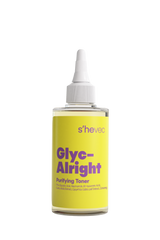
In short: Glycolic acid (INCI: Glycolic Acid) is the smallest molecule in the alpha hydroxy acid (AHA) family. It helps clear away dead cells from the skin's top layer (exfoliation); its effect is determined by concentration, pH and the rest of the formula together. Because it can increase sun sensitivity, the FDA recommends sunscreen during use and for one week after stopping. At s'hevec, Glyc-Alright contains 7% glycolic acid, pH 3.5–4.0.
| INCI name | Glycolic Acid (alpha hydroxy acid, AHA) |
|---|---|
| What it does | Aimed at the look of texture, tone and pores through exfoliation |
| Who it is for | Combination, normal and oily skin; sensitive skin after a patch test, at a low frequency |
| When | Evening |
| Frequency | Start with a few evenings a week and increase as tolerated |
| Sun sensitivity | Can increase it; sunscreen during use and for one week after stopping |
| Using it with other products | Fine with niacinamide and moisturiser; not on the same evening as other exfoliating acids and peels |
| At s'hevec | Glyc-Alright: 7% glycolic acid + 2% niacinamide |
What is glycolic acid?
Glycolic acid is the smallest molecule in the alpha hydroxy acid (AHA) class. AHAs are acids that carry a hydroxyl group in the alpha position; lactic, malic, tartaric and citric acid also belong to this family.
What does glycolic acid do?
Glycolic acid is aimed at the look of texture, tone and pores. According to the FDA, products containing AHAs are marketed to soften the look of fine lines and surface wrinkles, make texture and tone look more even, and unclog and clean out pores. Our sources contain no information that it changes pore size. In some formulas, AHAs are present only to adjust pH; in that case, they are not intended to exfoliate.
How does glycolic acid work on the skin?
Glycolic acid works by making it easier for cells on the skin's surface to shed; this process is called chemical exfoliation. The FDA states that the degree of exfoliation depends on the type and concentration of the AHA, the pH of the product and the other ingredients in the formula. The percentage on the label is not enough on its own: two products with the same concentration of glycolic acid can behave differently on the skin if their pH differs.
In a study with glycolic acid creams, the products lowered the pH of the skin's surface; the effect was more pronounced for the higher-concentration sample, and no barrier disruption or signs of irritation were seen. A review on AHAs also concludes that their effect on the skin depends on concentration. This is why s'hevec states the pH range alongside the concentration: in Glyc-Alright, 7% glycolic acid, pH 3.5–4.0.
Which s'hevec products contain glycolic acid?
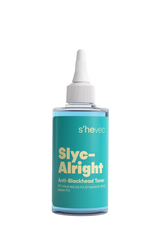
The product with glycolic acid as its key active is Glyc-Alright; it is also found together with lactic acid and BHA in Red Of Love, and within a low-concentration AHA complex in Slyc-Alright. Toners, serums and peels with exfoliating acids can be found in our collection of products containing AHA and BHA.
| Product | How glycolic acid / AHA is included | Format and use |
|---|---|---|
| Glyc-Alright | Key active: 7% glycolic acid + 2% niacinamide; pH 3.5–4.0 | Leave-on toner; evening |
| Red Of Love | AHA (glycolic and lactic) together with BHA; pH 3.6–3.9 | Rinse-off peel; rinsed off thoroughly with water after 5–10 minutes, no more than 2 times a week |
| Slyc-Alright | Key active 2% salicylic acid; glycolic acid is part of the low-concentration AHA complex, not a key active | Leave-on toner; evening |
| Smooth Me All Night | Key actives 4% niacinamide and AHA | Serum; night only |
Glyc-Alright Glycolic Acid Toner is for combination, normal and oily skin; its focus is the look of pores, uneven tone and dark spots. Red Of Love AHA/BHA Peel Serum is a peel step used on no more than 2 evenings a week and is not applied to the eye area. Slyc-Alright Salicylic Acid (BHA) Toner focuses on the look of blackheads; it is not the first choice for someone looking for glycolic acid. We compared which acid suits which skin type better in our article on the difference between AHA and BHA.
Does glycolic acid make skin sensitive to the sun?
Yes, glycolic acid can temporarily increase sun sensitivity. The FDA recommends the following warning on the labels of cosmetics containing AHAs: the product may increase the skin's sensitivity to the sun and particularly the possibility of sunburn; use a sunscreen, wear protective clothing and limit sun exposure while using the product and for a week afterwards.
In one of the studies behind this warning, sunburn cells increased in areas where glycolic acid was applied regularly, and redness began at a lower UV dose; one week after application stopped, these differences were no longer seen. In practice, this means using the acid in the evening and applying sunscreen every morning. Our summer skincare routine guide covers where the acid step fits in your routine during the hot months.
What can glycolic acid be used with, and what not?
Glycolic acid can be used with niacinamide and moisturiser, but not on the same evening as other exfoliating acids. Glyc-Alright contains niacinamide in the same formula; moisturiser follows the acid step, and Glyc-Alright is skipped on evenings when Red Of Love is applied.
- Not on the same evening: salicylic acid toner (Slyc-Alright), rinse-off AHA/BHA peel (Red Of Love), granular scrubs and retinol. The AAD notes that exfoliating while using products that can make the skin more sensitive, such as retinol, can increase dryness. How retinol fits into separate evenings in a routine is covered in our retinol guide.
- When not to use it: on irritated, broken or sunburnt skin; and, if any of the reactions listed in the side effects section below have started, until your skin has settled.
Which pairings with other actives can share the same evening is set out in a table in our guide to combining active ingredients.
Does glycolic acid have side effects, and who should take care?
It can: reactions reported with AHAs include swelling, burning and itching; reports submitted to the FDA also include rash, peeling, skin discolouration and increased sunburn. According to the FDA, more serious reactions are seen most often with “peel”-type products, which exfoliate most intensively.
- Sensitive skin: first a patch test on the inner forearm, then a low frequency. For very sensitive skin, you can start with Rice Rice Baby, which contains no AHA or BHA for exfoliation, instead of an acid product.
- Irritated or broken skin: do not apply; keep away from the eye area.
- If a reaction occurs: with intense burning or marked redness, rinse the product off with water and stop using it.
- Pregnancy, breastfeeding or an ongoing skin condition: If you are pregnant or breastfeeding, or have a skin condition, consult your doctor before use. This includes regular use of glycolic acid.
Frequently asked questions
Can you use glycolic acid every day?
Not from day one; start Glyc-Alright on a few evenings a week and increase the frequency as tolerated. We explain the steps and frequency in our guide on how to use a glycolic acid toner.
Can you use glycolic acid during pregnancy?
Glycolic acid is an AHA; at s'hevec, it is the key active in Glyc-Alright and appears together with lactic acid and BHA in Red Of Love. If you are pregnant or breastfeeding, or have a skin condition, consult your doctor before use.
Does glycolic acid prevent sweating?
No; glycolic acid is not an antiperspirant and does not reduce sweating. Glyc-Alright can also be used to help reduce the look of darker underarms and to help with sweat odour; we explain how to apply it in our article on the look of darker underarms.
Does glycolic acid change skin colour?
It does not make your skin's own tone lighter. By helping to clear away dead surface cells, it helps reduce the look of uneven tone and dullness. The AAD notes that harsh exfoliation can increase the formation of dark spots, especially on deeper skin tones; so using it more often will not make your tone lighter and can instead raise the risk of dark spots.
How does glycolic acid differ from lactic acid?
Both belong to the AHA family; lactic acid is a larger molecule and appears together with glycolic acid in Red Of Love. The details are in our article on what lactic acid is.
If the label says “AHA complex”, does it contain glycolic acid?
This wording alone does not tell you which acid is used; the INCI list does. Glycolic acid is listed as “Glycolic Acid” and, as in Slyc-Alright, can be part of a low-concentration complex.
Does glycolic acid affect the look of dark spots?
Through exfoliation, it can help reduce the look of uneven tone; it is not care focused on the look of dark spots. The FDA points out that products marketed to make skin colour lighter are regarded as drugs, not cosmetics, under US regulations.
Sources
- U.S. Food and Drug Administration (FDA). Alpha Hydroxy Acids.
- Tang SC et al. Dual Effects of Alpha-Hydroxy Acids on the Skin. Molecules. 2018.
- Lukic M et al. Formulation of topical acidic products and acidification of the skin - Contribution of glycolic acid. Int J Cosmet Sci. 2021.
- Kaidbey K et al. Topical glycolic acid enhances photodamage by ultraviolet light. Photodermatol Photoimmunol Photomed. 2003.
- American Academy of Dermatology (AAD). How to safely exfoliate at home.
This content is for information only and does not replace medical advice. s'hevec products are cosmetic products and are not intended for medical treatment. It was prepared by the s'hevec Team on the basis of the s'hevec product data library and the sources listed above.


