


The underarm is an area with its own particular features that is frequently exposed to hair removal such as shaving and plucking. The cause of the darker look here varies from person to person; the first step in care is to identify the habit that is putting the area under strain.
In short: The look of darker underarms may be linked to irritation caused by shaving and plucking: redness and dryness in the short term and, in some cases, a darker tone in the long term. The order in care is: reduce the source of irritation, moisturise with a fragrance-free product and add brightening care only when there is no irritation. Glyc-Alright, which contains 7% glycolic acid and 2% niacinamide, is applied in the evening to clean, dry skin with a cotton pad; it is not an antiperspirant.
What causes dark underarms?
Dark underarms, that is, the look of darker skin in this area, may be linked to irritation caused by hair removal there. A review of underarm skin states that shaving and plucking put strain on the skin, leading to redness and dryness in the short term and, in some cases, to the look of post-irritation darkening in the long term. The same review explains that these reactions can subside with appropriate moisturising care.
Friction also adds to the cycle: the American Academy of Dermatology (AAD) states that tight clothing can rub against the skin and increase dryness. The table below shows what irritation turns into at each stage and what to do at each stage.
| Stage | What happens? | What to do? |
|---|---|---|
| Hair removal (shaving, plucking) | The skin is put under strain | The shaving steps below |
| Short term | Redness and dryness | Fragrance-free moisturiser; a break from acid and fragranced products |
| Long term (in some cases) | The look of post-irritation darkening | Reduce the source of irritation and moisturise regularly; add brightening care when there is no irritation |
| Friction | Tight clothing strains dry skin further | Loose, cotton clothing |
What should you apply to your underarms after shaving or waxing?
Straight after shaving or waxing, apply only a gentle, fragrance-free moisturiser to your underarms; hold off on acid toners and fragranced products until the skin has settled. The AAD's dry skin tips support the shaving and moisturising steps:
- Shave at the end of your shower. Water softens the skin and hair and reduces the likelihood of irritation from shaving.
- Pat dry without rubbing. Pat dry with a clean towel; rubbing can irritate dry skin.
- Moisturise straight away. Apply your fragrance-free moisturiser while the skin is still slightly damp.
- Hold off on fragrance and alcohol. Do not apply products containing fragrance or alcohol while there is redness, burning or a small cut; the AAD recommends taking a break from products containing alcohol and fragrance when skin is dry.
The principle is the same with waxing: let the skin settle first, then use active care.
Can a glycolic acid toner be applied to the underarms?
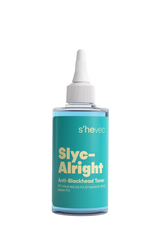
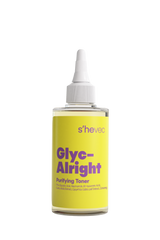
Yes, it can be applied to skin that is not irritated: Glyc-Alright Glycolic Acid Toner can be used as support for the look of darker underarms and for sweat odour, but it is not an antiperspirant and does not reduce sweating. The formula contains 7% glycolic acid (AHA) and 2% niacinamide; in the INCI list, Glycolic Acid comes straight after water, followed by Niacinamide. Its pH is in the 3.5–4.0 range, and it is not rinsed off.
- In the evening, wash your underarms and dry them completely.
- Put the toner on a cotton pad and apply a thin layer; do not rinse.
- Wait 1–2 minutes for it to absorb, then get dressed.
- Start with a few evenings a week; increase the frequency as long as your skin stays comfortable.
- On an evening when you have shaved or waxed, do not use it until the skin has settled.
Before first use, do a patch test on the inner forearm. We explain the steps in our article how to do a patch test. Do not layer it with another acid product on this area on the same evening. AHAs can increase the skin's sensitivity to the sun: apply sunscreen every morning while using this product and for one week after you stop. If you will be in the sun in sleeveless clothing, protect this area too.
How Glyc-Alright is used on the face, with a frequency table, is covered in our article how to use a glycolic acid toner.
How do you set up a daily routine for the look of darker underarms?
The routine consists of two products and a break on days with irritation: an antiperspirant in the morning and a glycolic acid toner in the evening; the two are not layered.
| Time | Step | Note |
|---|---|---|
| Morning | Antiperspirant; at s'hevec, Roll-On The Floor | A thin layer on washed and completely dry skin; let it dry before getting dressed |
| Evening | Glyc-Alright | On clean, dry skin with a cotton pad; start with a few evenings a week |
| Shaving or waxing day | Fragrance-free moisturiser only | Hold off on the roll-on and acid toner until any cut or irritation has passed |
| Every day | Loose, cotton clothing | Friction strains dry skin further |
If redness or burning appears in the area, take a break from both products. Judge any change in the look not after a single application but over regular use.
What does underarm care not do?
Care aims to help reduce a darker look linked to irritation; it does not change the skin's own tone. The look of darkening on the upper lip is a separate topic; it is covered in the article on the look of darkening on the upper lip.
- A brightening product does not stop the irritation that each hair removal starts again.
- For darkening that has nothing to do with irritation, it does not replace an assessment by a doctor.
When should you see a doctor?
See a doctor if the darkening appeared over a short time, is spreading quickly or comes with itching or pain. The following situations also need an assessment:
- If dryness persists despite the steps above: the AAD states that dryness that does not go away despite these tips may be linked to an underlying condition.
- If a reaction to a product is severe and does not ease with a cold compress.
- If you are pregnant or breastfeeding, or have a skin condition, consult your doctor before use. In that conversation, mention that you want to use a glycolic acid toner on your underarms.
Frequently asked questions
Does the look of darker underarms go away completely?
It depends on the cause and the person. If it is linked to irritation, judge the change over a period of regular care rather than after a single application; for darkening that irritation does not explain, check the signs listed above under when to see a doctor.
Can Glyc-Alright and an antiperspirant be used on the same day?
They can be used on the same day, but they are not layered: the antiperspirant goes on in the morning and Glyc-Alright in the evening; if redness or burning appears in the area, take a break from both. For the morning step of this routine, s'hevec offers Roll-On The Floor Brightening Roll-On, which contains a vitamin C derivative (ethyl ascorbic acid): it contains aluminium chlorohydrate as its antiperspirant active, accompanies daily care for the look of darker underarms and uneven tone, and contains fragrance. Do not use it if you have a known sensitivity to fragrance or to aluminium chlorohydrate.
What cleanser should you wash your underarms with?
For dry and sensitive skin, the AAD recommends a gentle cleanser and states that deodorant soaps can be too harsh for this skin. Do not use so much product that it forms a thick lather; apply the cleanser only where it is needed, for example to the underarms.
Which moisturiser should you apply to your underarms?
For dry and sensitive skin, the AAD recommends products labelled “fragrance-free” and a cream or ointment texture rather than a lotion; it lists glycerin, hyaluronic acid and shea butter among the ingredients to look for. An “unscented” label may not mean fragrance-free; the AAD states that these products can contain masking fragrances.
Sources
- Evans RL et al. Axillary skin: biology and care. Int J Cosmet Sci. 2012.
- American Academy of Dermatology (AAD). Dermatologists’ top tips for relieving dry skin.
- American Academy of Dermatology (AAD). How to test skin care products.
- U.S. Food and Drug Administration (FDA). Alpha Hydroxy Acids.
This content is for information only and does not replace medical advice. s'hevec products are cosmetic products and are not intended for medical treatment. It was prepared by the s'hevec Team on the basis of the s'hevec product data library and the sources listed above.


