


When you add a new product to your routine, the first question is order: toner or serum first, and where do eye serum and sunscreen go? The right order lets each product reach the skin and keeps two strong exfoliants from being layered on the same evening.
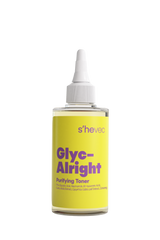
In short: The morning order is cleanser, toner, serum, eye serum, moisturiser and sunscreen; in the evening, the same order applies without sunscreen. The general principle is to work from the thinnest texture to the richest. An acid toner belongs in the evening (Glyc-Alright: 7% glycolic acid, pH 3.5–4.0), a vitamin C derivative serum in the morning (Glow Me Like You Do: 7% Ethyl Ascorbic Acid). Sunscreen is the last morning step.
In what order should you apply skincare products?
Products go on from the thinnest texture to the richest: watery toner first, serum in the middle, cream last.
- Cleanser. The first step morning and evening; in the evening it also lifts away make-up, sunscreen and the dirt that builds up during the day.
- Toner (optional). Because it is watery, it comes straight after cleansing.
- Serum. The fluid step that carries a concentrated dose of active ingredients.
- Eye serum (if you use one). After your face serum, before moisturiser.
- Moisturiser. Seals in the previous layers. Why serum and cream differ in texture and purpose: the difference between serum and moisturising cream.
- Sunscreen (morning only). The final layer of your routine.
This order is a practical arrangement rather than a strict rule: an absorption study using a human skin model reported that applying the tested moisturising lotions before or after an azelaic acid gel did not markedly change how azelaic acid passed into the skin. Where order really matters is in placing each product at the right time of day.
What is the right morning and evening skincare order?
Mornings centre on a vitamin C derivative serum and sunscreen, evenings on acid products. How s'hevec products fit in:
| Step | Morning | Evening |
|---|---|---|
| 1. Cleanse | Magic Foam Party Foaming Face Cleanser | Magic Foam Party |
| 2. Toner | Rice Rice Baby | Glyc-Alright Glycolic Acid Toner or Rice Rice Baby |
| 3. Serum | Glow Me Like You Do Vitamin C Serum; Hi Girls Bye Pores if needed | Hi Girls Bye Pores, Hit The Spot or Hydra Back Baby |
| 4. Eye area | Power De-Puff Girls | Power De-Puff Girls |
| 5. Moisturiser | Any Time Of Day Water-Based Moisturising Cream | Any Time Of Day |
| 6. Sunscreen | Just Protected From Sun SPF 50+ Hybrid Sunscreen | None |
Rice Rice Baby contains no AHA or BHA for exfoliation and its pH is in the 5.5–6.5 range, so it suits the morning toner step. If you use an acid toner in the evening, keep Rice Rice Baby for the morning so that the two toners are never layered.
The American Academy of Dermatology (AAD) recommends applying sunscreen every day before going outdoors. For how much to use and when to reapply: how much sunscreen to apply and how often to reapply.
How does the order change on acid evenings and evenings without exfoliating acids?
On an acid evening, choose a single exfoliant; evenings without exfoliating acids are for serums aimed at the look of dark spots or at the skin barrier.
| Step | Acid evening | Evening without exfoliating acids |
|---|---|---|
| Cleanse | Magic Foam Party | Magic Foam Party |
| Exfoliant or toner | Glyc-Alright (on a cotton pad, leave-on) or Red Of Love (rinse-off peel) | Rice Rice Baby, or skip the toner step |
| Serum | Hydra Back Baby (hydration) | Hit The Spot or Love In Blue This Time |
| Moisturiser | Any Time Of Day | Any Time Of Day |
| Next morning | Sunscreen is essential | Sunscreen is still the last step |
Glyc-Alright contains 7% glycolic acid and 2% niacinamide; in the first weeks, start with 2–3 evenings a week. Red Of Love is a rinse-off peel containing AHA and BHA; it is used on no more than 2 evenings a week and is not applied to the eye area. AHAs can increase the skin's sensitivity to the sun: apply sunscreen every morning while using this product and for one week after you stop.
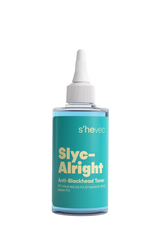
Layering two strong exfoliants on the same evening – for example Glyc-Alright with Slyc-Alright, or an acid toner with Red Of Love – increases the risk of irritation. Our guide to combining active ingredients explains which pairings of retinol and other actives should go on separate evenings.
Which products are for the morning and which for the evening?
Exfoliating acids belong to the evening, vitamin C derivative serum and sunscreen to the morning; hydration-focused products have a place in both routines.
- Morning: Glow Me Like You Do; sunscreen as the last step. For the differences in texture and use between the options: a comparison of s'hevec sun care products.
- Evening: Glyc-Alright, Slyc-Alright, Red Of Love, Shine On You and Smooth Me All Night; Hit The Spot and Love In Blue This Time preferably in the evening.
- Morning and evening: Magic Foam Party, Rice Rice Baby, Hydra Back Baby, Power De-Puff Girls, Any Time Of Day and Hi Girls Bye Pores (on sensitive skin, start with once a day).
Can you use two serums at the same time?
Yes; apply the second serum once the first has absorbed. Which comes first depends on the products; the directions for s'hevec products give these orders:
- Morning: Glow Me Like You Do first, then Hydra Back Baby once it has absorbed.
- Evening, dry and sensitive skin: Hydra Back Baby first on slightly damp skin, followed by Love In Blue This Time; the skin types recommended on the labels of both products include dry and sensitive skin.
Two strong serums with different targets are better split across the day: Glow Me Like You Do in the morning, Hit The Spot in the evening.
How many steps should a skincare routine have?
There is no set number of steps, and more steps do not mean better results. A review of cosmetic skincare stresses that cleansing and moisturising form the backbone of a routine. In the morning, sunscreen is added; at its shortest, three steps in the morning and two in the evening are enough.
Toner, serum and peel are added one at a time, as needed. Trying a new product on a small area before adding it to your routine is also a step the AAD recommends. The routine builder works out your morning and evening order step by step, based on your skin type and priorities.
If you are starting a routine from scratch, our guide to building a skincare routine explains step by step how to choose your first products for your skin type and in what order to introduce actives.
What does skincare order not change?
- The right order cannot turn a product that does not suit your skin type into a suitable one.
- Serum or moisturiser does not replace sunscreen: neither Glow Me Like You Do nor Any Time Of Day is a sunscreen.
- Going beyond the recommended frequency does not speed up results; a peel meant for no more than 2 evenings a week should not become an every-evening step.
When should you see a doctor?
See a doctor if you have a severe or persistent reaction, or a mole or lesion on your skin that looks different from the others.
- If a product causes burning, marked redness or itching, gently wash it off and stop using it. The AAD recommends seeing a dermatologist if the reaction is severe and does not settle with a cold compress.
- For a mole or lesion that looks different from the others, changes, itches or bleeds, the AAD recommends seeing a dermatologist.
- If you are pregnant or breastfeeding, or have a skin condition, consult your doctor before use. This also applies when adding an acid toner, a peel or a vitamin C derivative serum to your routine.
Frequently asked questions
At which step does eye serum go on?
After your face serum has absorbed, before moisturiser. Take 1–2 drops of Power De-Puff Girls on your ring finger and spread it with light patting movements, without rubbing and without letting it touch the eye; in the morning it can be used straight after Glow Me Like You Do.
Does the order change if I don't use a toner?
No; you skip the toner step and serum comes straight after cleansing. If you use a hydrating serum such as Hydra Back Baby, pat your face gently with a towel and apply the serum while your skin is still slightly damp.
Do you need to wait between an acid toner and a serum?
The directions for Glyc-Alright say to wait 1–2 minutes for the toner to absorb; serum or moisturiser follows. The 5–10 minutes for Red Of Love, however, is not absorption time: the peel is rinsed off thoroughly with water at the end of this time, and then you move on to moisturiser.
What time should you do your night-time skincare?
There is no set time; what matters is cleansed skin before bed. The AAD recommends washing your face before going to bed and clearing away the make-up and dirt that build up during the day. Your evening routine follows this cleanse in the order above; if you have used an acid product, follow the waiting time in its directions before moving on to moisturiser.
Do you use sunscreen in your night-time routine?
No. Sunscreen is applied against daytime UV rays and is the last step of the morning routine; the evening cleanse is also there to wash off the sunscreen you have worn all day. If you used an acid product in the evening, do not skip sunscreen the next morning.
What is the morning routine after waking up – should you wash your face?
Yes; the AAD recommends washing your face when you wake up to clear away the dirt and bacteria that collect on it during sleep. Then follow the morning order: toner (optional), serum, eye serum, moisturiser and sunscreen. How to use the cleanser is covered in our foaming face cleanser guide.
At which step does make-up go on?
After sunscreen, last of all. For reapplying during the day, you can use a sunscreen stick that goes on over make-up without rubbing; the steps are in our sunscreen stick guide.
Sources
- Del Rosso JQ et al. Impact of order of application of moisturizers on percutaneous absorption kinetics: evaluation of sequential application of moisturizer lotions and azelaic acid gel 15% using a human skin model. Cutis. 2009.
- Draelos ZD. Cosmeceuticals: What's Real, What's Not. Dermatol Clin. 2019.
- American Academy of Dermatology (AAD). Healthier-looking skin.
- American Academy of Dermatology (AAD). How to test skin care products.
This content is for information only and does not replace medical advice. s'hevec products are cosmetic products and are not intended for medical treatment. It was prepared by the s'hevec Team on the basis of the s'hevec product data library and the sources listed above.


