


When you add a second or third active to your routine, the real question is less the ingredients themselves than their timing. What most problem pairings have in common is exfoliating acids layered on the same evening.
In short: Most actives can be used in the same routine; the rule is timing. Vitamin C goes in the morning, AHA and BHA in the evening; one exfoliating acid per evening; retinol and acids on separate evenings. Niacinamide and hyaluronic acid fit into the same routine as most actives. In the s'hevec example, Glow Me Like You Do is used every morning, Glyc-Alright on 2–3 evenings a week to start with, and Red Of Love on no more than 2 evenings a week, rinsed off after 5–10 minutes.
Can active ingredients be used together?
Yes; what matters is which active goes in the morning and which goes on which evening. Two risks shape the plan:
- Exfoliation load: the US Food and Drug Administration (FDA) states that more serious adverse reactions are seen most often with the products that exfoliate the most. Layering two exfoliants on the same evening increases this load.
- Sun sensitivity: the FDA recommends sun protection alongside products containing AHAs and BHA. AHAs can increase the skin's sensitivity to the sun: apply sunscreen every morning while using this product and for one week after you stop.
That is why, during a period of acid use, the last step of the morning routine is a sunscreen.
Which actives go in the same routine, and which do not?
Niacinamide and hyaluronic acid fit into the same routine as almost any active; exfoliating acids, retinol and azelaic acid, however, do not share the same evening. Most of these are not prohibitions but a question of timing.
| Pairing | Same routine? | How? |
|---|---|---|
| AHA + BHA, as separate products | Not recommended on the same evening | Different evenings, or a single formula that contains both |
| AHA or BHA + retinol | Not recommended on the same evening | Different evenings |
| Vitamin C + AHA or BHA | Not recommended in the same routine | Vitamin C in the morning, acid in the evening |
| Vitamin C + niacinamide | Yes | In the same morning routine |
| Niacinamide + AHA or BHA | Yes | In the same formula, or as a serum after the acid |
| Azelaic acid + AHA, BHA or retinol | Not recommended on the same evening | Different evenings |
| Hyaluronic acid + any active | Yes | Hydration step after the active |
The order in which to apply niacinamide and vitamin C is a separate topic: niacinamide and vitamin C in the same routine.
Can retinol and AHA be used together?
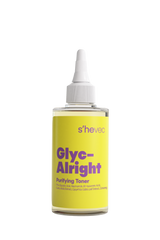
Not on the same evening; split across different evenings, they can be part of the same weekly routine. The American Academy of Dermatology (AAD) notes that ingredients such as retinol and glycolic acid can cause irritation, especially on sensitive skin. The s'hevec range has no retinol product; if your routine includes retinol, Glyc-Alright Glycolic Acid Toner or Red Of Love AHA/BHA Peel Serum goes on the evenings without retinol. How retinol is used, and which ingredients it does not share an evening with, is covered in the retinol guide.
Can vitamin C and acids be used in the same routine?
It is not recommended; the simplest solution is to put vitamin C in the morning and the exfoliating acid in the evening. A review of topical vitamin C highlights its antioxidant role, while noting that human studies are still limited. This antioxidant role moves vitamin C to the morning, under your sunscreen; vitamin C does not replace sunscreen.
At s'hevec, the morning step is Glow Me Like You Do Vitamin C Serum: it contains 7% Ethyl Ascorbic Acid (3-O-ethyl ascorbic acid), a stable vitamin C derivative. Love In Blue This Time, which is used mainly in the evening, also contains 2% Ethyl Ascorbic Acid; its warning rules out using it on the same evening as products containing AHAs or BHA.
How many actives should you use at once?
There is no fixed number; the rule of thumb is one exfoliating acid per evening and introducing new products one at a time. The AAD recommends trying a new product on a small area before moving on to the face; we explain how in our patch test steps. Also watch for the same active appearing in two products: Hi Girls Bye Pores and Any Time Of Day both contain niacinamide; if redness appears, use the Hi Girls Bye Pores serum less often.
Which s'hevec products can be used on the same evening?
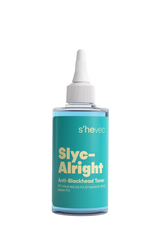
Glyc-Alright, Slyc-Alright, Red Of Love and Smooth Me All Night are acid products; only one of them is used per evening. The table is compiled from the products' own usage warnings.
| Pairing | Verdict | How? |
|---|---|---|
| Any two of the four acid products | Different evenings | One acid step per evening |
| Glyc-Alright or Slyc-Alright + Hi Girls Bye Pores | Same evening | Toner first, then serum |
| Glyc-Alright or Slyc-Alright + Hit The Spot | Same evening | Toner first, then serum |
| Smooth Me All Night + Hi Girls Bye Pores | Morning and evening | Serum in the morning, Smooth Me All Night in the evening |
| Acid product + Shine On You | Different evenings | The cream on an evening without exfoliating acids |
| Shine On You + Hit The Spot | Different evenings at first, then the same evening | Once your skin is used to them, serum first, then a thin layer of cream |
| Acid product + Love In Blue This Time | Different evenings | The serum on an evening without exfoliating acids |
| Glow Me Like You Do + evening products | Morning and evening | Glow Me Like You Do in the morning, the others in the evening |
On a Red Of Love evening, the peel is the only active step: it is rinsed off thoroughly with water after 5–10 minutes, followed only by a hydrating serum and a moisturiser. Hi Girls Bye Pores Pore Serum (10% niacinamide, 0.5% zinc PCA) does not exfoliate; it fits both in the morning and on toner evenings. All the serums are side by side in our face serums collection.
How do you build a weekly routine with s'hevec products?
For normal, combination or oily skin, three acid evenings, three serum evenings and one rest evening make a simple framework to start with. The mornings are the same: cleanse, Glow Me Like You Do, Hi Girls Bye Pores, moisturiser, sunscreen. You can tailor this framework to your skin type and experience with the routine builder.
| Day | Type of evening | Evening steps |
|---|---|---|
| 1 | Acid evening | Glyc-Alright, moisturiser |
| 2 | Serum evening | Hit The Spot, moisturiser |
| 3 | Peel evening | Red Of Love (rinsed off after 5–10 min), hydrating serum, moisturiser |
| 4 | Serum evening | Hi Girls Bye Pores, moisturiser |
| 5 | Acid evening | Glyc-Alright, Hit The Spot, moisturiser |
| 6 | Serum evening | Hit The Spot, moisturiser |
| 7 | Rest evening | Cleanse and moisturiser |
As your skin settles, Glyc-Alright evenings can increase; Red Of Love does not go beyond 2 evenings a week. On dry skin, Glyc-Alright stays at 1–2 evenings a week; on sensitive skin, Hi Girls Bye Pores starts once a day; on serum evenings, Love In Blue This Time can be used instead of Hit The Spot, and the skin types recommended on its label include sensitive skin. The general order of steps, from cleansing to sunscreen, is in our skincare routine order guide.
If your skin reacts, in what order do you step back?
First, stop the product you added most recently; if you introduced products one at a time, it is usually the cause.
- Stop the last product. If your skin turns red and itchy after a newly added acid or serum, the AAD recommends gently washing the product off and not applying it again.
- Pause your acid evenings. Reduce your routine to cleansing, moisturiser and morning sunscreen. If stinging after a toner or peel lasts longer with every use, the acid evenings stop until your skin calms down.
- Add products back one at a time. Once your skin has calmed down, reintroduce products one by one and at a low frequency; leave out the one that caused the reaction.
For a reaction that does not settle with a cold compress or petroleum jelly, the AAD recommends seeing a dermatologist. If you are pregnant or breastfeeding, or have a skin condition, consult your doctor before use. This also applies when adding a second acid or a new active to your routine.
Frequently asked questions
Can AHA and BHA be used on the same evening?
Not layered as separate products; a single formula that contains both counts as one step. Which skin the two acids suit depends on the differences between AHA and BHA.
Does having two actives in one product count as layering?
No; actives formulated together are one step. Glyc-Alright contains 7% glycolic acid with 2% niacinamide, and Red Of Love is a rinse-off peel that combines AHAs and BHA in the same formula. Layering starts with a second acid product on the same evening.
Can you apply vitamin C after a peel?
Not on the same evening; vitamin C takes its place in the next morning's routine. If your skin feels more sensitive after a peel, stick to hydration and sunscreen only for a few days.
Can arbutin be used with niacinamide or vitamin C?
With niacinamide, yes: Hit The Spot Dark Spot Serum combines 2% tranexamic acid and 2% alpha arbutin with supporting niacinamide in the same formula. It can be used on the same day as a vitamin C derivative serum; the tidy approach is to split the day: Glow Me Like You Do in the morning, Hit The Spot in the evening. What alpha arbutin is and its limit in cosmetics are covered in our article what is alpha arbutin.
Do actives make each other less effective?
There is no study in our source list that examines this directly. The timing advice here is based on the two risks documented in the sources: irritation and sun sensitivity.
Sources
- U.S. Food and Drug Administration (FDA). Alpha Hydroxy Acids.
- U.S. Food and Drug Administration (FDA). Beta Hydroxy Acids.
- American Academy of Dermatology (AAD). How to test skin care products.
- Al-Niaimi F et al. Topical Vitamin C and the Skin: Mechanisms of Action and Clinical Applications. J Clin Aesthet Dermatol. 2017.
This content is for information only and does not replace medical advice. s'hevec products are cosmetic products and are not intended for medical treatment. It was prepared by the s'hevec Team on the basis of the s'hevec product data library and the sources listed above.


