


A glycolic acid toner is often the first acid product added to a routine, and this is the step that raises most of the questions: what time of day to apply it, how many evenings a week and what goes on top.
In short: Apply a glycolic acid toner in the evening, with a cotton pad, to cleansed and dried skin, and do not rinse it off. With Glyc-Alright (7% glycolic acid, 2% niacinamide, pH 3.5–4.0), start with 2–3 evenings a week and increase the frequency as your skin settles. Do not use a second strong exfoliant on the same evening. A hydrating serum or cream follows the toner, and sunscreen goes on the next morning.
How to use a glycolic acid toner: step by step
In the evening routine, the toner comes straight after cleansing, before serum and moisturiser.
- Cleanse. Wash your face with a gentle cleanser and pat it completely dry with a towel.
- Apply with a cotton pad. Pour the toner onto a cotton pad and sweep it over the face and neck, keeping away from the eye area and the corners of the mouth.
- Do not rinse. The toner stays on the skin; wait 1–2 minutes for it to absorb.
- Moisturise. Follow with your hydrating serum and cream.
- Apply sunscreen in the morning. AHAs can increase the skin's sensitivity to the sun: apply sunscreen every morning while using this product and for one week after you stop. The reason for this sensitivity is explained in our guide to how glycolic acid works on the skin, and the right amount of sunscreen in our guide to how much sunscreen to apply to the face.
Can you use a glycolic acid toner every day? How many times a week?
Not every evening from day one: with Glyc-Alright, start with 2–3 evenings a week and increase the frequency as your skin comfortably handles that schedule. Your skin's response sets the limit: if redness, dryness or stinging increases, go back to the previous frequency.
| Your skin | Starting frequency | Note |
|---|---|---|
| Oily, combination, normal | 2–3 evenings a week | The skin types on the Glyc-Alright label; increase as tolerated |
| Dry | 1–2 evenings a week | Never skip the hydrating step after the toner |
| Sensitive | Low frequency, try on a small area first | Instead of an acid toner, you can start with Rice Rice Baby Brightening Rice Toner, which contains no AHA or BHA for exfoliation |
What should you apply after a glycolic acid toner?
Only a hydrating step follows the toner; do not add a second exfoliant on the same evening.
- Straight after: a hydrating serum with hyaluronic acid, such as Hydra Back Baby Hydrating Serum with 2% 8D hyaluronic acid, followed by a moisturising cream.
- Not on the same evening: retinol, the salicylic acid toner Slyc-Alright or the rinse-off AHA/BHA peel Red Of Love. Take a break from Glyc-Alright on the evenings you use these.
- The next morning: sunscreen. For this step, s'hevec offers Just Protected From Sun SPF 50+ Hybrid Sunscreen, with hybrid filters and a fluid texture.
Can you use a glycolic acid toner and niacinamide on the same evening?
Yes; Glyc-Alright already combines the two in one formula. If you also use a separate niacinamide serum, you can apply it after the toner and before your moisturiser. A scientific review describes niacinamide as a well-tolerated ingredient that is widely used in cosmetics.
Glyc-Alright: what is in the formula and what is it for?
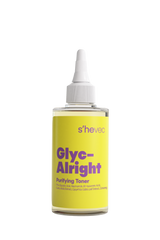
Glyc-Alright Glycolic Acid Toner is a 200 ml leave-on toner used in the evening for rough-looking texture, dull tone and visible pores. It also helps reduce the look of uneven tone and dark spots.
| Feature | Glyc-Alright |
|---|---|
| Key actives | 7% glycolic acid (AHA) + 2% niacinamide |
| Position in the INCI | Glycolic Acid second, straight after water (Aqua); Niacinamide third |
| Supporting ingredients | Centella asiatica (gotu kola), Tasmanian pepper, liquorice root, ginseng, panthenol, amino acid complex |
| pH | 3.5–4.0 |
| Use | Evening, with a cotton pad, leave on |
A concentration on its own does not tell you how much a toner will exfoliate. According to the FDA, the degree of exfoliation from a product containing AHAs depends on the type of acid, its concentration, the pH of the product and the rest of the formula. A scientific review of AHAs likewise stresses that the purpose of use changes with concentration. This is why Glyc-Alright's 7% glycolic acid concentration has to be read together with its pH range of 3.5–4.0. In the same step, niacinamide covers the visible-pore and even-tone side. If you would like to compare Glyc-Alright with the salicylic acid toner and the rinse-off peels, our collection of products with AHA and BHA brings them together.
What a glycolic acid toner does not do
- It is not an antiperspirant; it does not reduce sweating.
- It does not correct pitted scars or deep wrinkles; exfoliation is limited to the skin's surface.
- It does not physically make pores smaller; by helping to clear dead cells from the pore openings, it helps pores look less noticeable.
- It does not replace sunscreen.
Who should use Glyc-Alright with care?
- Sensitive skin: try the toner on a small area before applying it to the whole face; the American Academy of Dermatology (AAD) also recommends this order for new products.
- After shaving, waxing or a skin procedure: do not apply to irritated or broken skin, or to skin that has recently undergone a procedure.
Frequently asked questions
Can Glyc-Alright be used in the morning?
The directions for use say evening. Applying the toner in the evening does not cancel out sun sensitivity; the sunscreen step the next morning is still needed.
Can Glyc-Alright be used on the underarms?
Yes; it can be used to help with the look of darker underarms and with sweat odour. Our care guide to the look of darker underarms covers the causes of this darkening and the care steps for the area in detail.
Does a glycolic acid toner remove make-up?
No. Glyc-Alright is not a cleanser but a toner that is applied after cleansing and left on the skin; make-up and dirt are taken off first with a cleanser.
Glyc-Alright or Slyc-Alright?
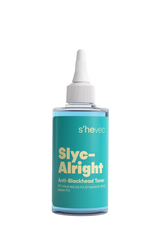
If your priority is rough-looking texture, dull tone and uneven-looking tone, choose Glyc-Alright; if it is blackheads and blemish-prone skin, choose Slyc-Alright with 2% salicylic acid.
Is tingling normal with Glyc-Alright, and when should you stop?
Mild tingling can occur during the first applications; the AAD notes that glycolic acid can cause irritation, especially on sensitive skin, and that this is normal and temporary. If the stinging does not settle within a few minutes, or the skin turns red and itchy, wash the toner off with water and do not use it again after that evening. If a reaction persists or worsens even after washing, see your doctor.
Can Glyc-Alright be used during pregnancy?
Glyc-Alright is a leave-on toner with 7% glycolic acid (AHA) and 2% niacinamide; AHAs can also increase the skin's sensitivity to the sun. If you are pregnant or breastfeeding, or have a skin condition, consult your doctor before use. If you already use the toner, also consult your doctor before continuing; at the appointment, mention that the product is a leave-on AHA toner and how many evenings a week you use it.
Sources
- U.S. Food and Drug Administration (FDA). Alpha Hydroxy Acids.
- Babilas P et al. Cosmetic and dermatologic use of alpha hydroxy acids. J Dtsch Dermatol Ges. 2012.
- Wohlrab J et al. Niacinamide - mechanisms of action and its topical use in dermatology. Skin Pharmacol Physiol. 2014.
- American Academy of Dermatology (AAD). How to test skin care products.
This content is for information only and does not replace medical advice. s'hevec products are cosmetic products and are not intended for medical treatment. It was prepared by the s'hevec Team on the basis of the s'hevec product data library and the sources listed above.


