


Activated charcoal serums are often presented as black formulas that “clear out” pores. Smooth Me All Night also gets its colour from activated charcoal; to use it in your night routine with the right expectations, you need to know which ingredient does the main work in the formula.
In short: Apply 3–4 drops of Smooth Me All Night in the evening only, to cleansed and dried skin; follow with a moisturiser, and use sunscreen the next morning. The main work on the look of pores and rough texture is done by 4% niacinamide together with 2.5% AHA and low-concentration salicylic acid (BHA). The effect of activated charcoal on the skin is not supported by evidence from human studies. Start with a few nights a week; on oily, combination and normal skin, use it every night once your skin has adjusted, and on dry skin 2–3 nights a week.
What does an activated charcoal serum do?
In Smooth Me All Night, activated charcoal is a supporting ingredient that gives the formula its name and black colour; the main work on smooth texture and the look of pores is done by niacinamide and exfoliating acids. A dermatology review on the rise of activated charcoal in cosmetics states that the claims attributed to activated charcoal products are not backed by evidence from human studies and that there is no evidence showing an exfoliating or anti-ageing effect.
- Niacinamide: the amide of vitamin B3. A dermatology review describes its sebum-balancing effect, given adequate bioavailability and depending on concentration, and refers to it as a well-tolerated cosmetic ingredient. In this serum, it helps reduce the look of shine and uneven tone.
- AHA complex and salicylic acid: an exfoliating support that helps clear dead cells from the surface (exfoliation). According to the US Food and Drug Administration (FDA), the degree of exfoliation depends on the type and concentration of the AHA, the pH of the product and the other ingredients in the formula; the 2.5% AHA and low-concentration salicylic acid in this serum are there not for a peel effect but as the exfoliating step of a night serum.
Does an activated charcoal serum clear blackheads?
No; there is no evidence from human studies that activated charcoal draws out blackheads or clears pores. An ingredient that has not even been shown to exfoliate cannot be said to draw out build-up in the pores; the salicylic acid in the serum is also at a low concentration. For this reason, the following expectations of Smooth Me All Night are not accurate:
- It does not “empty” pores or pull out blackheads like a magnet.
- It does not change the structural size of pores. The three main factors that make pores look more visible are high sebum, loss of elasticity around the pore and hair follicle volume; of these, the serum only offers care aimed at sebum and surface build-up. We cover the other factors in our article on why pores become more visible.
- It is not a high-concentration peel. It is not designed for deep surface renewal.
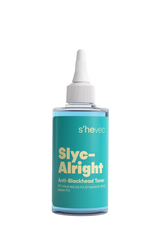
We explain how blackheads form and how they differ from sebaceous filaments in our guide to reducing the look of blackheads. If the look of blackheads is your priority, Slyc-Alright Salicylic Acid (BHA) Toner, with 2% salicylic acid, is designed for this need; use it on the evenings when you are not using Smooth Me All Night.
How do you use an activated charcoal serum?
Use it in the evening after cleansing, before moisturiser, as a thin layer.
- Cleanse and dry. Wash your face and pat it completely dry with a towel.
- Spread 3–4 drops. Distribute the serum evenly over your face; do not apply it around the eyes.
- Work it in. Gently massage the serum into your skin until absorbed.
- Moisturise. Once the serum has absorbed, apply your moisturiser.
Can you use an activated charcoal serum every night?
On oily, combination and normal skin, it can be used every night once your skin has adjusted; on dry skin, 2–3 nights a week is enough, and sensitive skin starts at a lower frequency. Starting with a few nights and increasing as your skin tolerates it makes adjusting easier. Do not use retinol or another acid product on the same evening; if your routine also includes an acid toner, split the evenings according to your needs:
| Evening | Routine | When to choose it |
|---|---|---|
| Serum evening | Cleanse → Smooth Me All Night → moisturiser | Rough texture and the look of pores |
| BHA evening | Cleanse → Slyc-Alright → moisturiser | If the look of blackheads is the priority |
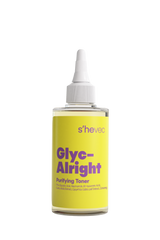
| AHA evening | Cleanse → Glyc-Alright → moisturiser | If uneven tone and radiance are the priority |
| Rest evening | Cleanse → moisturiser | Added in between for dry or sensitised skin |
Only one row of the table is used each evening. We go into the weekly schedule, and which actives can share a routine, in our guide to using active ingredients together.
Can you use an activated charcoal serum in the morning?
No; Smooth Me All Night is used in the evening only, and because it contains AHAs, the focus of your morning routine is sun protection. AHAs can increase the skin's sensitivity to the sun: apply sunscreen every morning while using this product and for one week after you stop.
If you would also like to focus on the look of pores and sebum in the morning, Hi Girls Bye Pores Pore Serum, with 10% niacinamide and 0.5% zinc PCA, can be used after toner and before moisturiser; the acid step stays in the evening.
What is in the formula of Smooth Me All Night?
Smooth Me All Night Activated Charcoal Night Serum is a 30 ml night serum; the concentrations stated for the product are 4% niacinamide and 2.5% AHA, while salicylic acid and the supporting ingredients are listed without percentages. Other toners and serums aimed at the look of pores can be found in our collection of products for visible pores.
| Key actives | 4% niacinamide and 2.5% AHA (acid complex: Malic, Glycolic, Lactic, Pyruvic and Tartaric Acid in the INCI); niacinamide comes second in the INCI list, straight after water |
|---|---|
| Exfoliating support | Low-concentration salicylic acid (Salicylic Acid) |
| Supporting ingredients | Activated charcoal (Charcoal Powder; after EDTA in the INCI), gotu kola (Centella Asiatica Extract) |
| When to use | Evening only; followed by moisturiser |
| Skin type | Combination, normal, oily; on dry skin, 2–3 nights a week |
| Concern | The look of pores, rough texture, the look of blemishes |
Who should take care?
- First use: do a patch test on a small area of the inner forearm; do not skip this step on dry and sensitive skin.
- Irritated skin: do not apply it to broken or irritated skin, or to skin that has recently had a procedure.
- If you use a skin product prescribed by a doctor: consult your doctor before starting the serum.
- Severe, painful or widespread blemishes: this may not be a cosmetic concern for a night serum to address; show your skin to your doctor before continuing with the serum.
Frequently asked questions
Does the black colour of the serum stain the skin?
The black colour comes from the activated charcoal in the formula and, according to the product information, disappears as the serum is worked into the skin. Spreading the 3–4 drops as a thin layer and working them in completely is enough.
Do you rinse off Smooth Me All Night?
No, it is not rinsed off; it is a night serum that stays on the skin, followed by a moisturiser. In this respect it differs from Red Of Love AHA/BHA Peel Serum, which is left on for 5–10 minutes and rinsed off thoroughly with water.
Can Smooth Me All Night and retinol be used on the same evening?
No; as the serum contains AHAs and salicylic acid, keep retinol for a different evening. On nights when you use retinol, take a break from Smooth Me All Night and acid toners.
Can you use an activated charcoal serum during pregnancy?
The serum is a leave-on night product containing an AHA complex (glycolic, lactic, malic, pyruvic and tartaric acid) and low-concentration salicylic acid. If you are pregnant or breastfeeding, or have a skin condition, consult your doctor before use. This applies when you continue using the serum as well as when you start it.
Sources
- Sanchez N et al. Charcoal: An ancient material with a new face. Clin Dermatol. 2020.
- Wohlrab J et al. Niacinamide - mechanisms of action and its topical use in dermatology. Skin Pharmacol Physiol. 2014.
- U.S. Food and Drug Administration (FDA). Alpha Hydroxy Acids.
- Lee SJ et al. Facial Pores: Definition, Causes, and Treatment Options. Dermatol Surg. 2016.
This content is for information only and does not replace medical advice. s'hevec products are cosmetic products and are not intended for medical treatment. It was prepared by the s'hevec Team on the basis of the s'hevec product data library and the sources listed above.


