


Lactic acid often appears alongside glycolic acid in peels that contain AHAs, and its name comes up in research on hydration. Knowing what this research does and does not show makes it easier to set realistic expectations for an acid product.
In short: Lactic acid (INCI: Lactic Acid) is an alpha hydroxy acid (AHA) from the same family as glycolic acid: it helps clear away dead cells from the skin's surface. The strength of its effect is determined by the acid's concentration and the product's pH together. In the s'hevec range, it appears in Red Of Love alongside glycolic acid; this product is a peel with a pH of 3.6–3.9 that is left on for 5–10 minutes, then rinsed off, and used no more than 2 evenings a week.
| INCI name | Lactic Acid |
|---|---|
| Group | Alpha hydroxy acid (AHA) |
| What determines its effect | pH and concentration |
| In the s'hevec range | Red Of Love (AHA group: glycolic and lactic acid; 2% BHA) |
What is lactic acid and what does it do?
Lactic acid is an exfoliant that helps the skin shed dead cells from its surface. The U.S. Food and Drug Administration (FDA) reports that products containing AHAs are marketed for smoother texture, a more even-looking tone and a softer look of fine lines.
What does the effect of lactic acid depend on?
The effect of lactic acid depends on pH and concentration together. In a controlled study with lactic acid, when the concentration was held constant, the shedding effect depended largely on pH, and when the pH was held constant, the rate at which the surface renewed depended on concentration; the authors suggest that it is the “free” portion of the acid that is active. This is why two products containing the same acid can behave differently if their pH differs. More detail: what skin pH is and why pH matters in acid products.
Does lactic acid hydrate the skin?
Lactic acid does not replace a moisturiser; however, there is a study that examined its relationship with the lipid barrier. This study, carried out with the L and D isomers, reported the following:
- lotions containing lactic acid raised the level of ceramides in the uppermost layer of the skin (stratum corneum), and supported barrier function and resistance to visible dryness;
- L-lactic acid showed the most pronounced effect, while D-lactic acid on its own did not change ceramide levels.
These findings relate to the lotions used in the study; the name “Lactic Acid” on a label does not indicate the isomer, and the same result cannot be expected if the product type, concentration or pH is different. A peel containing lactic acid does not replace the moisturising step.
What is the difference between lactic acid and glycolic acid?
Both are exfoliating AHAs; the difference lies in molecular size and in the focus of the research.
| Feature | Glycolic acid | Lactic acid |
|---|---|---|
| Molecule | The smallest in the AHA family | Slightly larger than glycolic acid |
| Highlighted in our sources | FDA research on sun sensitivity | The ceramide and barrier finding |
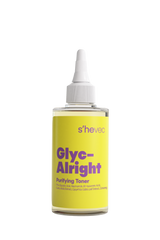
| In the s'hevec range | Glyc-Alright (key active), Red Of Love | Red Of Love |
Glycolic acid and sun sensitivity: what glycolic acid is and what it does. The leave-on option focused on glycolic acid is Glyc-Alright Glycolic Acid Toner, with 7% glycolic acid.
Which s'hevec product contains lactic acid?
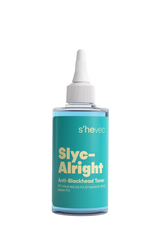
The product whose product page names lactic acid as part of its AHA group is Red Of Love 10% AHA + 2% BHA Peel Serum. In its ingredient list, Glycolic Acid is in third place and Lactic Acid in ninth; this order does not give exact concentrations, and the separate concentration of lactic acid is not stated on the label. The steps for use are in our guide how to use an AHA BHA peel serum. Lactic Acid also appears in the ingredient list of Red Velvet Face; the box of this product states “For professional use only.” In Slyc-Alright and Smooth Me All Night, Lactic Acid is part of a complex made up of several AHAs. Do not use Red Of Love and Red Velvet Face together. Both are listed alongside the peel-off rice mask in our peels and masks collection.
Does lactic acid have side effects, and who should take care?
Yes, lactic acid can cause reactions: the reports the FDA has received about products containing AHAs include burning, rash, swelling, peeling, itching and increased sunburn; more serious reactions are seen most often with “skin peeler” products that provide the highest degree of exfoliation.
- Sun: AHAs can increase the skin's sensitivity to the sun: apply sunscreen every morning while using this product and for one week after you stop. The FDA also recommends protective clothing and limited sun exposure.
- Irritated skin: do not apply to broken, irritated or sunburnt skin.
If you are pregnant or breastfeeding, or have a skin condition, consult your doctor before use. In that conversation, mention that you want to start a peel with lactic acid.
Frequently asked questions
Can lactic acid be used on sensitive skin?
Before first use, do a patch test on the inner forearm. The skin types recommended on the label of Red Of Love are combination, normal and oily skin; its product page recommends a low frequency on sensitive skin and 1–2 evenings a week on dry skin.
Can a lactic acid peel be applied around the eyes?
No. The Red Of Love box carries an eye warning, and the product is not applied around the eyes: apply it to the face, leaving the eye area free, and rinse off thoroughly with water after 5–10 minutes.
Can lactic acid and salicylic acid be used together?
Do not layer them as separate products on the same evening; Red Of Love brings the two together in one formula. For how they differ, see the difference between AHA and BHA.
Can lactic acid and retinol be used on the same evening?
No; do not add retinol or another exfoliant on a peel evening. Use the two products on different evenings.
Sources
- U.S. Food and Drug Administration (FDA). Alpha Hydroxy Acids.
- Thueson DO et al. The roles of pH and concentration in lactic acid-induced stimulation of epidermal turnover. Dermatol Surg. 1998.
- Rawlings AV et al. Effect of lactic acid isomers on keratinocyte ceramide synthesis, stratum corneum lipid levels and stratum corneum barrier function. Arch Dermatol Res. 1996.
This content is for information only and does not replace medical advice. s'hevec products are cosmetic products and are not intended for medical treatment. It was prepared by the s'hevec Team on the basis of the s'hevec product data library and the sources listed above.


