


On cosmetics packaging, “vegan” and “cruelty-free” often sit side by side and are read as if they meant the same thing. They answer different questions: one tells you what is in the product, the other whether the product and its ingredients have been tested on animals.
In short: A vegan cosmetic product contains no ingredients obtained from animals and no animal by-products; cruelty-free means that the product and its ingredients have not been tested on animals. One looks at the formula, the other at testing, and neither includes the other. Vegan does not mean natural or organic. In the EU, animal testing has been banned for finished cosmetics since 2004 and for ingredients since 2009.
What does vegan mean for cosmetics?
A vegan cosmetic product is one whose formula contains no ingredients obtained from animals and no animal by-products. The label looks only at where the ingredients come from; on its own, it says nothing about how the product is made or tested.
An ingredient that does the same job can be obtained from a plant, synthetic or animal source. This is why a vegan claim rests on checking where every raw material in the formula comes from, using supplier information.
What does cruelty-free mean?
Cruelty-free is a claim that the finished product and its ingredients have not been tested on animals. The claim may belong to the brand or to a certification body; what it covers depends on the criteria published by whoever makes the claim.
Are cosmetics tested on animals in the EU?
No; animal testing for cosmetic purposes is banned in the EU. According to the European Commission, the ban has two parts:
- Testing ban: in force for finished cosmetic products since 11 September 2004 and for ingredients or combinations of ingredients since 11 March 2009.
- Marketing ban: placing finished products and ingredients that have been tested on animals on the EU market has been banned since 11 March 2009. For repeated-dose toxicity, reproductive toxicity and toxicokinetics tests, this ban has applied since 11 March 2013, regardless of whether alternative methods are available.
Since 11 July 2013, these provisions have been part of the EU Cosmetic Products Regulation. On the EU market, the ban on animal testing is already the legal framework; cruelty-free is a claim added on top of it, and its scope varies with whoever makes it.
What is the difference between vegan and cruelty-free?
Vegan concerns the ingredients of the formula, cruelty-free the testing process; a product can carry one without the other.
| Question | Vegan | Cruelty-free |
|---|---|---|
| What does it look at? | The source of every raw material | Whether the product and its ingredients have been tested on animals |
| What does it exclude? | Ingredients and by-products obtained from animals | Tests carried out on animals |
| What does it not tell you on its own? | How the product was tested | Whether the formula contains animal-derived ingredients |
| How is it verified? | Raw material origin information, vegan certification | The brand's testing policy, the certification body's standard |
| What neither of them tells you | That the product suits your skin or is effective | That the product suits your skin or is effective |
A product that contains an animal-derived ingredient and has not been tested on animals can be cruelty-free, but it cannot be vegan.
Does vegan mean natural or organic?
No. Vegan only tells you that the ingredients are not of animal origin; it does not say they are plant-based, natural or organic. An ingredient made in a laboratory can be vegan; an ingredient obtained from nature is not vegan if it comes from an animal. Organic is a separate claim based on its own criteria.
A review by Urban and colleagues notes that products marketed as clean, natural, organic, vegan and cruelty-free are increasing in number and that people often ask what these labels mean. The review recommends understanding how valid these marketing terms are and providing accurate information on ingredient safety.
How do you check a vegan or cruelty-free label?
- Check who the claim belongs to. Is it a brand claim or a third-party certification? Certification programmes have their own standards; for example, The Vegan Society's Vegan Trademark programme has certified products and ingredients since 1990 and reviews each product application together with manufacturers and suppliers.
- Look for the two claims separately. A vegan logo tells you nothing about testing, and a cruelty-free logo tells you nothing about the formula.
- Read the ingredient list. The list shows which ingredients you need to ask the brand about. Check whether the full list is published on the packaging and on the product page. For example, the full INCI lists for Love In Blue This Time Ceramide and Copper Peptide Serum and Rice You Up Brightening Serum with Niacinamide and Rice Extract are on their product pages.
Can you tell from the ingredient list whether a product is vegan?
Often not on its own. The INCI name gives the standard name of an ingredient but does not always show its source: the same name may stand for a raw material of plant, synthetic or animal origin. Some names point to an animal origin; even then, the definitive answer comes from the supplier's origin documentation. For example, the Hydrolyzed Collagen in the ingredient list of Rice Vibes Only is of synthetic origin; the product is vegan. What the names and their order tell you is covered in detail in our step-by-step guide to reading an INCI list.
How does s'hevec approach vegan and cruelty-free labels?
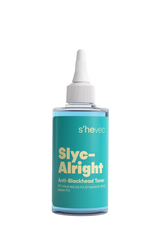
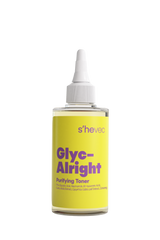
All s'hevec products are vegan and cruelty-free: no animal-derived ingredients are used in the formulas, and the products and their ingredients are not tested on animals. The brand does not describe its products as natural or organic; it explains its formulas through their ingredients, concentrations and ingredient lists. Another term often seen on labels is explained in our article what are dermocosmetics. Since 2022, the brand has also provided food support for street animals with every order. You can browse the full range under all products.
When should you see a doctor?
A vegan or cruelty-free label does not tell you whether your skin will react to an ingredient in the formula. The AAD notes that a single ingredient, such as a preservative, can cause a reaction, and that products with botanical ingredients or labelled “unscented” can also contain fragrance-related ingredients. Following the AAD's advice, see a doctor in these situations:
- If swelling or an itchy rash that starts where you applied the product is severe and does not settle after you wash the product off and apply a cold compress or petroleum jelly.
- If you cannot work out which ingredient in the formula caused the reaction. A doctor can carry out diagnostic patch testing if needed. Once the responsible ingredient has been identified, it helps to look for it in the ingredient lists of new products, whether or not they are vegan.
Frequently asked questions
Can a product without vegan certification be vegan?
It can. The term vegan is also used as a brand's own claim; certification shows that a third party has reviewed this claim against its own standard. To tell the two apart, check which organisation the logo belongs to.
Does cruelty-free mean the product has never been tested?
No. Cruelty-free means that no tests were carried out on animals; there are alternative test methods that do not use animals. In the EU, EURL ECVAM, part of the Commission's Joint Research Centre, plays a role in developing and validating these methods.
Are there rules for claims that no animal testing was carried out?
In the EU, yes: on 7 June 2006 the European Commission published a recommendation containing guidelines for claims that no animal testing was carried out. Check what the claim covers in the explanation given by the brand or the certification body.
Are cosmetics with snail extract, honey, beeswax or propolis vegan?
No; all four are obtained from animals. Snail extract is the snail's secretion and appears in ingredient lists as Snail Secretion Filtrate. Honey (Mel), beeswax (Cera Alba) and propolis (Propolis Extract) are substances produced by bees. Because the definition of vegan excludes ingredients obtained from animals and animal by-products, a product containing any of these cannot be vegan; if it has not been tested on animals, it can still be cruelty-free. You can look up the INCI names in the European Commission's CosIng database.
Are vegan cosmetics more suitable for sensitive skin?
Not in themselves; a vegan claim describes the source of the ingredients, not how your skin will react to them. If you have sensitive skin, get to know any new product, whatever its label, by trying it on a small area first.
Are vegan cosmetics more effective?
A vegan claim tells you nothing about effectiveness. What a product does depends on which active ingredients it contains, at what concentration, and on the formula as a whole.
Are clean cosmetics and vegan cosmetics the same thing?
No. Vegan describes the source of the ingredients; clean is a marketing term generally used to say that certain ingredients have been left out of the formula. The review by Urban and colleagues looks at what these terms mean and at the safety of ingredients that are commonly left out in this market.
Sources
- Urban K et al. A Guide to Informed Skincare: The Meaning of Clean, Natural, Organic, Vegan, and Cruelty-Free. J Drugs Dermatol. 2022.
- European Commission. Ban on animal testing (cosmetics).
- The Vegan Society. Vegan Trademark standards.
- American Academy of Dermatology (AAD). How to test skin care products.
- European Commission. CosIng – cosmetic ingredient database.
This content is for information only and does not replace medical advice. s'hevec products are cosmetic products and are not intended for medical treatment. It was prepared by the s'hevec Team on the basis of the s'hevec product data library and the sources listed above.


