


Dry skin feels tight after cleansing, looks dull and rough, and may flake in some areas. A routine has two jobs: adding moisture to the skin and limiting the loss of that moisture. The order and frequency of the steps matter as much as the choice of products.
In short: A dry skin routine is built on a short, lukewarm cleanse, a hydrating serum applied while the skin is still slightly damp and a cream on top; in the evening, a serum with ceramides adds barrier support, and the morning routine ends with sunscreen. Showers last no longer than 5–10 minutes, and the skin is patted dry with a towel. On dry skin, an AHA/BHA peel is used no more than 1–2 evenings a week, and products containing fragrance, alcohol and retinoids are set aside.
What causes dry skin?
In dry skin, the moisture in the uppermost layer of the skin is reduced. Lodén's review often associates dryness with weakened barrier function and notes that dryness is not a single, uniform condition. The layers of the barrier and how it becomes weakened are covered in detail in our guide to the structure of the skin barrier.
The American Academy of Dermatology (AAD) lists long baths and showers, harsh cleansers such as deodorant soaps, and cold, dry air as everyday factors that increase dryness. To tell whether your dryness comes from your skin type or from these factors, see the steps for identifying your skin type. Questions specific to the cold season are answered in our winter skincare routine; how to adapt your routine gradually during the change of season, when the air turns cold and dry, is covered in skincare during the change of seasons.
How should you cleanse dry skin?
For dry skin, cleansing is short, lukewarm and low in foam. The AAD recommends limiting baths and showers to 5–10 minutes with lukewarm water, using just enough cleanser to remove dirt and oil but not so much that you see a thick lather, patting the skin dry with a clean, dry towel without rubbing, and applying moisturiser immediately afterwards.
The type of cleanser also makes a difference. According to a review by Kuehl and colleagues, soap causes the greatest changes to the skin barrier and raises the skin's pH, while liquid facial cleansers affect the barrier less and change its pH less. Magic Foam Party, used in the routine below, is an SLS-free, paraben-free foam; dry skin is not among the skin types on its label, and how to use it on dry skin is covered in the questions below.
How do you layer hydration on dry skin?
Hydrating products are applied straight after cleansing, while the skin is still slightly damp: first a fluid serum, then a cream on top. The AAD recommends applying moisturiser while the skin is damp and whenever the skin feels dry during the day, working it in with a gentle massage. A hydrating serum is not left on its own: the humectants in the serum draw in water, and a cream is needed on top to hold on to this moisture.
Lodén's review stresses that there are large differences between moisturisers and that, as with other actives, the effect depends on the amount applied and on regular use. On dry skin, apply a sufficient amount of cream and keep up the routine without skipping days.
How do you choose a moisturiser for dry skin?
For dry skin, a moisturiser is chosen by looking at its ingredient groups and its texture. According to a review on the skin barrier and moisturisation, the ingredients in moisturisers work in three ways:
| Group | What it does | Examples |
|---|---|---|
| Humectant | Draws water from the deeper layers into the upper layer of the skin | Glycerin, hyaluronic acid, Pentavitin |
| Emollient | Blends into the upper layer of the skin and helps keep the surface soft | Plant oils such as jojoba and shea |
| Occlusive | Forms a layer on the surface and limits water loss | Petrolatum, mineral oil |
For dry skin, the AAD recommends a cream or ointment rather than a lotion, and products labelled “fragrance-free”. In the s'hevec range, the humectant step is covered by Hydra Back Baby and Any Time Of Day; because Any Time Of Day is water-based and silicone-free, cracked or flaking areas may need a richer cream with a higher oil content on top. This is covered separately below, in the question on products that contain oils. The criteria for choosing a moisturiser for each skin type are set out in the how to choose a moisturiser guide, and products defined as suitable for this skin type can be found in our collection of skincare products for dry skin.
What should a morning and evening routine for dry skin look like?
The morning routine focuses on hydration and sun protection, the evening routine on barrier support. For a personal order based on your priorities, you can use the routine builder.
| Step | Morning | Evening |
|---|---|---|
| 1. Cleanse | Magic Foam Party; a small amount, lukewarm water, brief contact | If you are wearing sunscreen, dissolve it first with a cleansing oil; if you are wearing make-up, use a cleansing oil or Mic Drop; then Magic Foam Party |
| 2. Toner (optional) | Rice Rice Baby Brightening Rice Toner | Rice Rice Baby |
| 3. Serum | Hydra Back Baby Hydrating Serum, 3–4 drops on slightly damp skin | Hydra Back Baby, then, once absorbed, Love In Blue This Time Ceramide and Copper Peptide Serum, 3–4 drops |
| 4. Cream | Any Time Of Day Water-Based Moisturising Cream | Any Time Of Day |
| 5. Sunscreen | Just Protected From Sun SPF 50+ hybrid sunscreen | None |
Each product's place in this order comes from its formula:
- Hydra Back Baby: 2% 8D hyaluronic acid and 1.2% Pentavitin (saccharide isomerate, a sugar-derived humectant).
- Love In Blue This Time: a serum with 2% ceramide complex, intended mainly for evening use; the skin types on its label are sensitive, dry and normal. It does not exfoliate.
- Any Time Of Day: 5% niacinamide and 2% 8D hyaluronic acid, supported by panthenol and ceramide complex; water-based and silicone-free.
- Rice Rice Baby: contains 3% niacinamide and has a pH of 5.5–6.5; it contains no AHA or BHA for exfoliation.
Can you use acid products on dry skin?
You can, but sparingly and without skipping the hydration step. Dry skin does not appear on the labels of the s'hevec products that contain exfoliating acids; the Red Of Love product page recommends 1–2 evenings a week for dry skin. Lodén's review notes that sensory reactions caused by a low pH and by ingredients such as lactic acid can reduce how well a product is accepted, even in moisturisers.
| Product | Skin types on the label | On dry skin |
|---|---|---|
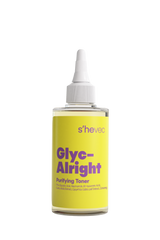
| Glyc-Alright glycolic acid toner | Combination, normal, oily | Dry is not on the label |
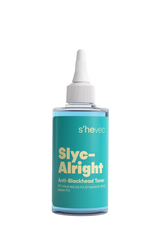
| Slyc-Alright salicylic acid (BHA) toner | Combination, normal, oily | Dry is not on the label |
| Red Of Love AHA/BHA peel | Combination, normal, oily | 1–2 evenings a week, according to the product page; rinse off thoroughly with water after 5–10 minutes |
| Red Velvet Face | Normal, oily; the box states “For professional use only.” | Dry is not on the label; on dry skin, you can start with Red Of Love instead of Red Velvet Face. Do not use Red Of Love and Red Velvet Face together. |
| Rice Rice Baby | Sensitive, dry, normal | No AHA or BHA for exfoliation; morning and evening |
After Red Of Love has been rinsed off, Hydra Back Baby and a cream follow. Red Of Love is not applied around the eyes, and no other exfoliant or Love In Blue This Time is used on the same evening. Glycolic and lactic acid are both AHAs. AHAs can increase the skin's sensitivity to the sun: apply sunscreen every morning while using this product and for one week after you stop. The AAD also recommends setting aside products that contain retinoids, alcohol (other than hand sanitiser) and fragrance if you have dry skin. If you are pregnant or breastfeeding, or have a skin condition, consult your doctor before use. In that conversation, mention the acid product you want to start.
Can you use products that contain oils on dry skin?
Yes; according to the AAD, creams and ointments give the skin more moisture than lotions, and the ingredients to look for in creams for dry skin include jojoba oil, shea butter, lanolin, mineral oil and petrolatum (lanolin is of animal origin; s'hevec products contain no lanolin). Lodén's review reports that petrolatum contributes immediately to barrier function in an upper layer depleted of lipids, while heavy, greasy textures can feel uncomfortable to some users.
Any Time Of Day is a water-based cream; it completes the daily hydration step on the face, but cracked or flaking areas may need a richer cream with a higher oil content, or an ointment.
When should you see a doctor?
If dryness persists despite the recommended steps, see a doctor; the AAD notes that it may be caused by an underlying condition.
- If dryness persists with itching, cracking or bleeding: dryness that does not respond to moisturiser and cracks and bleeds may be due to a condition that skincare will not resolve; see your doctor so that the cause can be identified.
- If a product you apply, including a moisturiser, causes burning, stinging or irritation, stop using it; the AAD recommends reporting this to your dermatologist.
- Consult a dermatologist before starting anti-itch creams; the AAD notes that many of them can irritate very dry skin.
Frequently asked questions
Is a product labelled “unscented” enough for dry skin?
Not always; look at the INCI list rather than the wording on the front of the pack. If Parfum or Fragrance appears in the list, the product contains fragrance. For dry skin, the AAD recommends “fragrance-free” rather than “unscented” products, because unscented products may contain ingredients that mask odours and can irritate dry skin.
Does dry skin need a toner?
It is not essential; a toner does not replace a serum or a cream. If you use Rice Rice Baby, you can pour it into your palm and press it onto your face; this avoids the friction of a cotton pad.
Can Love In Blue This Time be used every evening?
Yes, it can be a regular step in the evening routine. On sensitive skin, start with a few evenings a week in the first weeks, and keep it separate from evenings when you use an L-ascorbic acid serum.
Can you use a foaming cleanser on dry skin?
You can; what matters is the amount of foam and how long it stays in contact with the skin. Work a small amount of Magic Foam Party into a lather in your palm, spread it over your wet face without rubbing and rinse with lukewarm water. If your skin still feels tight after washing, the product page recommends using less and switching from hot to lukewarm water. The PHA in the formula stays on the skin only briefly in a rinse-off product; the foam does not replace a peel.
What should you do if dry skin itches?
Reapply moisturiser while your skin is still damp and whenever it feels dry during the day, and keep showers short and lukewarm. The AAD recommends consulting a dermatologist before using an anti-itch cream, as many of these products can irritate very dry skin. If the itching persists despite these steps, it may be a skin condition; see your doctor for an assessment.
Sources
- American Academy of Dermatology (AAD). Dermatologists’ top tips for relieving dry skin.
- Lodén M. Role of topical emollients and moisturizers in the treatment of dry skin barrier disorders. Am J Clin Dermatol. 2003.
- Kuehl BL et al. Cutaneous cleansers. Skin Therapy Lett. 2003.
- Rajkumar J et al. The Skin Barrier and Moisturization: Function, Disruption, and Mechanisms of Repair. Skin Pharmacol Physiol. 2023.
This content is for information only and does not replace medical advice. s'hevec products are cosmetic products and are not intended for medical treatment. It was prepared by the s'hevec Team on the basis of the s'hevec product data library and the sources listed above.


