


Niacinamide appears in many product types, from serums to cleansing foams; in the s'hevec range, it is found in serums, creams, toners, a mask, a foam, sunscreens and a roll-on. Knowing what it does and at what concentration it appears in each product helps you avoid layering the same ingredient without realising it.
In short: Niacinamide is the water-soluble amide form of vitamin B3. It helps balance the look of sebum and reduce the look of dark spots and red blotchiness, and it supports the moisture of the skin's uppermost layer. It does not exfoliate, and a safety assessment did not find it to be a photosensitiser, so it can be used in the morning as well as in the evening. Of the nine s'hevec products with a stated concentration, the highest is 10% niacinamide (serum) and the lowest is 2% niacinamide (toner and foam).
| INCI name | Niacinamide (nicotinamide) |
|---|---|
| What it does | Sebum balance, the look of uneven tone and red blotchiness, hydration support |
| When | Morning or evening; in an acid formula, the acid determines the timing |
| Sun sensitivity | Not found to be a photosensitiser; in an acid formula, sensitivity comes from the acid |
| In the s'hevec range | Nine products with a stated concentration (table below) |
What is niacinamide?
Niacinamide is the amide form of vitamin B3 (niacin); it is also known as nicotinamide. It is a water-loving (hydrophilic) molecule that is also found in the body (endogenous).
What does niacinamide do?
Niacinamide serves several appearance goals at once. A review reports that, depending on concentration, its effects include sebum-regulating (sebostatic) and brightening aspects; this is why it features in formulas aimed at the look of pores and shine. In a controlled study on ageing facial skin, a reduction in the look of fine lines, dark spots, red blotchiness and yellowish dullness, and an increase in elasticity, were observed.
How does niacinamide work?
Niacinamide does not work by dissolving dead cells like an acid, but by interacting with signalling pathways inside cells and with the skin's uppermost layer (stratum corneum). According to reviews, it regulates the production of certain signalling molecules by inhibiting an enzyme in the cell nucleus called PARP-1. In a 2025 laboratory study with isolated stratum corneum samples, niacinamide increased the water uptake of this layer in a humid environment, and in a dry environment it loosened the keratin structure, an effect that could support flexibility; the researchers stress that it does not behave like a traditional keratolytic (exfoliant).
Which s'hevec products contain niacinamide, and at what concentration?
The concentration is chosen according to the product type and the rest of the formula: it is highest in the pore-focused serum and lower in the toner and cream, where it is balanced with other key actives. Leave-on products:
| Product | Concentration | Type | When |
|---|---|---|---|
| Hi Girls Bye Pores Pore Serum | 10% niacinamide | Serum | 1–2 times a day |
| Rice You Up Brightening Serum with Niacinamide and Rice Extract | 5% niacinamide | Serum | Morning or evening |
| Any Time Of Day Water-Based Moisturising Cream | 5% niacinamide | Cream | Morning and evening |
| Smooth Me All Night | 4% niacinamide | Night serum | Evening only |
| Rice Rice Baby | 3% niacinamide | Toner | Morning and evening |
| Shine On You Azelaic Acid Cream | 3% niacinamide | Cream | Evening |
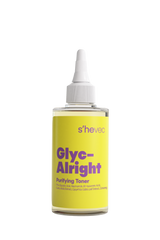
| Glyc-Alright | 2% niacinamide | Toner | Evening |
Among rinse-off products, the Rice Vibes Only peel-off mask contains 3% and the Magic Foam Party cleansing foam 2% niacinamide. Because the foam is rinsed off with water, it is in contact with the skin only briefly, while a serum stays on the skin; similar percentages do not do the same job in different product types (see what an active percentage means). In Love In Blue This Time, Hit The Spot, Power De-Puff Girls, Firm Baby Firm, Crush On Pink, Matte's Up? and Roll-On The Floor, niacinamide is a supporting ingredient, and its concentration is not stated. All of them, with and without a stated concentration, can be found in our niacinamide products collection.
Should niacinamide be used in the morning or the evening?
Either works; for Smooth Me All Night, Glyc-Alright and Shine On You, which are evening products in the table, the timing is set by the acid they contain. How many times a day and in what order to apply the serum is covered in the guide how to use a niacinamide serum.
What can you use with niacinamide, and what should you avoid?
Our sources do not define any ingredient that should “not be used together” with niacinamide, and s'hevec formulas carry it in the same bottle as glycolic acid, azelaic acid, zinc PCA and hyaluronic acid. For order and timing with vitamin C derivatives, see can niacinamide and vitamin C be used together.
The most frequently asked combinations and how they appear in s'hevec formulas:
| With niacinamide | In the s'hevec range |
|---|---|
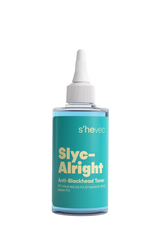
| Salicylic acid (BHA) | Fine on the same evening: niacinamide serum after Slyc-Alright; Smooth Me All Night carries both in the same formula. |
| Glycolic acid (AHA) | Glyc-Alright carries both in the same formula. |
| Azelaic acid | Shine On You carries both in the same formula. |
| Alpha arbutin | In Hit The Spot, niacinamide is a supporting ingredient. |
| Peptide | Love In Blue This Time carries it in the same formula as copper tripeptide-1. |
| Hyaluronic acid | Any Time Of Day and Hi Girls Bye Pores carry it together with 8D hyaluronic acid. |
| Retinol | There is no retinol in the s'hevec range; our sources do not describe any incompatibility between the two. The rules specific to retinol are covered in the retinol guide. |
In practice, the answer to “what should you avoid” is not an ingredient but the amount: in the same routine, niacinamide can come from more than one product; if you notice redness, reduce how often you use the product with the highest concentration.
Is niacinamide enough for the look of dark spots?
If the look of dark spots is your focus, niacinamide is one part of the routine, not its only step. The two spot-focused s'hevec formulas use it together with other key actives:
- Hit The Spot: its key actives are tranexamic acid and alpha arbutin, and niacinamide is a supporting ingredient; a serum intended mainly for evening use.
- Shine On You: a cream with azelaic acid, for when the look of dark spots comes with redness or the look of post-blemish marks.
- Both together: try them on different evenings first; once your skin is used to both, apply the serum first on the same evening, followed by a thin layer of the cream.
Does niacinamide have side effects, and does it cause sun sensitivity?
Niacinamide is described as a well-tolerated ingredient; the Cosmetic Ingredient Review (CIR) Expert Panel found it safe as used in cosmetics and stated that it is not a significant irritant, sensitiser or photosensitiser. Even so, not every skin is comfortable with every formula:
- Sensitive skin: high concentrations of niacinamide can cause temporary redness. Before first use, do a patch test on the inner forearm. Start with once-daily use.
- Acid formulas: Glyc-Alright and Smooth Me All Night contain AHAs. AHAs can increase the skin's sensitivity to the sun: apply sunscreen every morning while using this product and for one week after you stop.
- Irritation: if burning, marked redness or itching persists, take a break from using the product.
- Pregnancy, breastfeeding or a skin condition under a doctor's care: the CIR assessment covers general use in cosmetics and is not specific to these situations. If you are pregnant or breastfeeding, or have a skin condition, consult your doctor before use. In that conversation, mention the product containing niacinamide, especially the acid-containing Glyc-Alright or Smooth Me All Night.
What does niacinamide not do?
- It does not replace an acid step for rough-looking texture.
- It does not change the structural size of pores; it helps them look less noticeable.
- It does not replace sunscreen; without daytime sun protection, a routine for the look of dark spots remains incomplete.
Frequently asked questions
Are niacinamide and niacin the same thing?
No. Niacin is nicotinic acid, and niacinamide is its amide form. The CIR panel found the two sufficiently similar from a toxicological point of view to assess them in the same report, and considered both safe as used in cosmetics.
Is niacinamide suitable for dry skin too?
Hi Girls Bye Pores is for combination, normal and oily skin; on dry skin, it is used once a day, followed by a moisturiser. Any Time Of Day is for all skin types, and Rice Rice Baby is for sensitive, dry and normal skin.
Can you use more than one product with niacinamide in the same routine?
Yes. If you notice redness, reduce how often you use the product with the highest concentration, or use one of the products every other day.
What should you do if a product with niacinamide gets into your eyes?
In case of contact with eyes, rinse thoroughly with water. The CIR report notes that some formulations were found to be mildly irritating to the eyes.
Can niacinamide be used during pregnancy?
The CIR safety assessment we rely on covers general use in cosmetics; it is not an assessment specific to this period. If you are pregnant or breastfeeding, or have a skin condition, consult your doctor before use.
At what age can niacinamide be used?
There is no specific age limit; the criterion for choosing is not age but your skin's needs and the skin type the product is recommended for. How a routine changes with age is covered in the article on skincare by age.
How long does it take to see the effect of niacinamide?
Appearance goals are assessed over weeks, not days; no definitive timeframe is given for a single product.
Sources
- Wohlrab J et al. Niacinamide - mechanisms of action and its topical use in dermatology. Skin Pharmacol Physiol. 2014.
- Bissett DL et al. Niacinamide: A B vitamin that improves aging facial skin appearance. Dermatol Surg. 2005.
- Sjöberg T et al. Niacinamide and its impact on stratum corneum hydration and structure. Sci Rep. 2025.
- Cosmetic Ingredient Review Expert Panel. Final report of the safety assessment of niacinamide and niacin. Int J Toxicol. 2005.
This content is for information only and does not replace medical advice. s'hevec products are cosmetic products and are not intended for medical treatment. It was prepared by the s'hevec Team on the basis of the s'hevec product data library and the sources listed above.


