


“Zinc PCA” in the ingredient lists of serums, toners and sunscreens is often confused with zinc oxide. The two do different jobs; knowing the difference helps you set the right expectations from a label.
In short: Zinc PCA (INCI: Zinc PCA) is a salt formed by zinc and PCA (pyrrolidone carboxylic acid); in cosmetics, it is used in formulas for the look of sebum and shine. It is not the same as zinc oxide, a UV filter in sunscreens. Controlled research specific to zinc PCA is limited. At s'hevec, Hi Girls Bye Pores contains 0.5% zinc PCA together with 10% niacinamide; it also appears, without a stated concentration, in Slyc-Alright, Matte's Up? and Smooth Me All Night.
| INCI name | Zinc PCA |
|---|---|
| Who it is for | Combination, normal and oily skin |
| Concentration (s'hevec) | 0.5%, stated only for Hi Girls Bye Pores |
| At s'hevec | Hi Girls Bye Pores, Slyc-Alright, Matte's Up?, Smooth Me All Night |
What is zinc PCA?
It is a skincare ingredient that appears on labels as “Zinc PCA”; at s'hevec, it is found together with niacinamide (Hi Girls Bye Pores, Matte's Up?), salicylic acid (Slyc-Alright) or both (Smooth Me All Night). Its position in the list varies by product: in Slyc-Alright it comes straight after Salicylic Acid, while in Hi Girls Bye Pores it is listed after Sodium PCA, Erythritol and Chondrus Crispus Powder.
Are zinc PCA and zinc oxide the same thing?
No; zinc oxide is a mineral UV filter used in sunscreens, whereas zinc PCA is not a UV filter. The AAD defines products whose active ingredient is zinc oxide or titanium dioxide as physical (mineral) sunscreens; seeing “Zinc” in a list does not on its own mean sun protection.
| On the label | Type of ingredient | Where you see it |
|---|---|---|
| Zinc PCA | Salt of zinc with PCA; skincare ingredient | Serums, toners, sunscreens; in four s'hevec products |
| Zinc Oxide | Mineral UV filter | The active ingredients section of a sunscreen |
| Zinc Gluconate | A different zinc salt | A supporting ingredient in Love In Blue This Time |
What does zinc PCA do, and what does the evidence say?
Zinc PCA is used in formulas designed to balance the look of sebum and shine; controlled evidence specific to this use, however, is limited. A 2022 review of zinc's uses on the skin links its antioxidant and immunomodulatory properties to its effects in various skin conditions; however, the uses it examines are medical conditions, and it notes that large randomised controlled trials are needed for zinc used on its own. Its limits:
- It does not change the physical size of pores; the causes are explained in our guide to the look of pores.
- It does not stop sebum production. Because sebum is linked to the skin's hydration and water barrier, the aim is not to strip it away but to balance shine; for a routine, see our oily skin routine.
Why is zinc PCA used together with niacinamide?
In the range, zinc PCA appears with niacinamide in three products (Hi Girls Bye Pores, Matte's Up?, Smooth Me All Night), and in this pairing the sebum evidence we cite relates to niacinamide. One review describes niacinamide as a well-tolerated ingredient often used in cosmetics, with concentration-dependent sebum-reducing (sebostatic) effects; zinc PCA accompanies it in these formulas. Slyc-Alright, by contrast, does not contain niacinamide.
Which s'hevec products contain zinc PCA?
| Product | Zinc PCA | Alongside | What it does not do |
|---|---|---|---|
| Hi Girls Bye Pores (serum) | 0.5% zinc PCA, key ingredient | 10% niacinamide, patented Dendriclear™ | Does not make pores smaller |
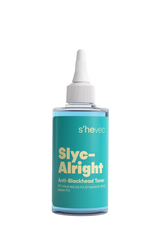
| Slyc-Alright (toner) | No stated concentration | 2% salicylic acid, low-concentration AHA complex | Deep or widespread blemishes are not the focus of this toner |
| Matte's Up? (sunscreen) | No stated concentration | Niacinamide; SPF 50+, matte finish | Its protection comes from UV filters (SPF 50+), not from zinc PCA |
| Smooth Me All Night (night serum) | No stated concentration | 4% niacinamide, 2.5% AHA | Does not change the structural size of pores |
Hi Girls Bye Pores Pore Serum is the only product of ours that states its zinc PCA concentration. Slyc-Alright Salicylic Acid (BHA) Toner is aimed at the look of blackheads, and Matte's Up? SPF 50+ Mattifying Sunscreen at morning shine. Other products for the look of pores and shine can be found in our collection of products for visible pores.
Does zinc PCA have side effects, and who should take care?
The sources we rely on contain no safety assessment specific to zinc PCA, so we make no claims about how well it is tolerated. What to watch out for is determined by the key ingredients of each formula:
- Hi Girls Bye Pores: any issue is more likely to come from the 10% niacinamide than from zinc PCA; if sensitive skin shows temporary redness, use it less often, and if it persists, take a break.
- Slyc-Alright: it also contains 1.2% AHA. AHAs can increase the skin's sensitivity to the sun: apply sunscreen every morning while using this product and for one week after you stop.
- Matte's Up?: as it is applied to the whole face every morning, try it first on a small area if you have sensitive skin; if redness or stinging in the test area does not go away, cleanse off the cream and do not add this product to your routine.
During pregnancy and breastfeeding, what matters is not zinc PCA but the salicylic acid and AHA complex in Slyc-Alright. If you are pregnant or breastfeeding, or have a skin condition, consult your doctor before use. This also applies to the other two products listed above. People with a salicylate or acetylsalicylic acid (aspirin) allergy should also not use Slyc-Alright without asking a doctor.
Frequently asked questions
Are zinc PCA and sodium PCA the same?
No. Both are salts of PCA; one is formed with zinc, the other with sodium. They appear on separate lines in the ingredient lists of Hi Girls Bye Pores and Slyc-Alright.
Is zinc PCA applied to the skin the same as zinc taken by mouth?
No. Zinc PCA is a cosmetic ingredient; the zinc review discusses oral supplementation for deficiency as a separate topic. Seeing Zinc PCA on a label is not a substitute for a zinc supplement.
Can zinc PCA be used on dry skin?
All four products are formulated for combination, normal and oily skin. For dry skin without shine, the priority is hydration; a product with zinc PCA is not a necessary step in that routine.
Can a product containing zinc PCA be used under make-up?
Yes. Matte's Up? is a final morning step that contains zinc PCA and leaves a matte base for make-up; make-up goes on after it. For where the serum fits in a morning routine, see our article on how to use a niacinamide serum.
Sources
- Searle T et al. Zinc in dermatology. J Dermatolog Treat. 2022.
- Sakuma TH et al. Oily skin: an overview. Skin Pharmacol Physiol. 2012.
- Wohlrab J et al. Niacinamide - mechanisms of action and its topical use in dermatology. Skin Pharmacol Physiol. 2014.
- American Academy of Dermatology (AAD). Understand sunscreen labels.
This content is for information only and does not replace medical advice. s'hevec products are cosmetic products and are not intended for medical treatment. It was prepared by the s'hevec Team on the basis of the s'hevec product data library and the sources listed above.


