


Salicylic acid is a frequently searched-for ingredient for the look of blackheads and clogged pores; on labels it appears as “Salicylic Acid”. Knowing how it works makes it easier to choose the right product and frequency.
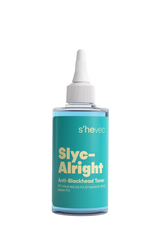
In short: Salicylic acid is an exfoliant known in cosmetics as BHA. By loosening the bonds that hold cells together, it helps dissolve the plug of dead cells in the pore opening. Slyc-Alright contains 2% salicylic acid and has a pH of 3.9–4.2; it is not rinsed off and is used in the evening, starting with 2–3 times a week. The 2% BHA in Red Of Love, by contrast, is rinsed off after 5–10 minutes. Sun protection is needed while using BHA.
| INCI name | Salicylic Acid (known in cosmetics as BHA) |
|---|---|
| What it does | Helps loosen pore congestion; its focus is the look of blackheads and pores |
| Who it is for | Combination, normal and oily skin; on sensitive skin with low frequency and a patch test |
| When | In the evening in s'hevec products |
| Frequency | For the toner, start with 2–3 evenings a week; for the rinse-off peel, no more than 2 a week |
| Sun sensitivity | The FDA recommends sun protection while using BHA; sunscreen every morning |
| Using it with others | With moisturiser; not on the same evening as retinol or another exfoliant |
| At s'hevec | Slyc-Alright (2% salicylic acid + 1.2% AHA), Red Of Love, Smooth Me All Night |
What is salicylic acid?
According to the FDA, salicylic acid is the BHA most commonly used in cosmetics today. It has a long history of use; the scientific literature describes it as an ingredient that is also used for peeling because it can exfoliate the skin's outermost layer (stratum corneum).
How does salicylic acid work inside the pore?
Salicylic acid helps dissolve the plug of dead cells that builds up in the pore opening (a comedone); Arif's review calls this a comedolytic effect. According to the same review, salicylic acid used to be considered keratolytic, that is, an ingredient that breaks down keratin; today it is regarded as desmolytic: instead of breaking down keratin fibres, it loosens the bonds that hold cells together. As a result, dead cells detach more easily both from the surface and from the pore opening.
Why is salicylic acid called BHA, and are they the same thing?
The name comes from cosmetic use, not from chemistry: according to the FDA, from a chemist's point of view salicylic acid is not a true beta hydroxy acid; cosmetic companies refer to it as BHA, and consumers have adopted the name. The two terms are not always equivalent; the FDA list includes other ingredients that may appear as BHA (beta hydroxybutanoic acid, tropic acid, trethocanic acid). In s'hevec products, “BHA” refers only to salicylic acid; its INCI name is Salicylic Acid.
Which s'hevec products contain salicylic acid?
Salicylic acid appears in three products, with different roles; the INCI order shows its position, not its concentration.
| Product | Role of salicylic acid | Format |
|---|---|---|
| Slyc-Alright | Key active: 2% salicylic acid + 1.2% AHA; pH 3.9–4.2; 5th in the INCI list | Toner without alcohol; evening |
| Red Of Love | 2% BHA, together with glycolic and lactic acid; 6th in the INCI list, after glycolic acid | Rinse-off AHA/BHA peel; evening |
| Smooth Me All Night | Supporting ingredient: low-concentration salicylic acid; key active 4% niacinamide; 7th in the INCI list | Serum; night only |
Slyc-Alright Salicylic Acid (BHA) Toner contains no niacinamide; glycolic acid is not a key active in this formula but part of the low-concentration AHA complex. Red Of Love 10% AHA + 2% BHA Peel Serum and Smooth Me All Night Activated Charcoal Night Serum carry salicylic acid alongside other actives. Red Velvet Face also contains BHA and is not in the table; its box carries this warning: For professional use only. Do not use Red Of Love and Red Velvet Face together. Details are in the guide to high-concentration AHA/BHA peels. Step-by-step use of Slyc-Alright, including whether it can be used every day or in the morning, is covered in the guide how to use a salicylic acid toner. Other s'hevec products aimed at the look of pores can be found together in our collection of products for visible pores.
Do you wash salicylic acid off after applying it?
It depends on the product format: a toner or serum is left on the skin, while a peel is rinsed off with water after a set time. Slyc-Alright and Smooth Me All Night are not rinsed off; moisturiser follows once they have absorbed. Red Of Love is spread over clean, dry skin and rinsed off thoroughly with water after 5–10 minutes. That is why the 2% BHA in the two products should not be read in the same way: in the toner, salicylic acid stays on the skin; in the peel, contact time is short and use is less frequent.
Does salicylic acid have side effects, and who should not use it?
It can; the main reported issues are irritation and stinging. The review by Madan and Levitt points out that the amount of salicylic acid absorbed into the body after application to the skin varies with the vehicle used, and that salicylic acid poisoning (salicylism) can occur, albeit rarely. This is the reason behind the FDA's advice to follow the directions on the label and not to exceed the recommended number of applications.
- First use: the FDA recommends testing a product containing BHA on a small area before applying it to a large area.
- Acetylsalicylic acid (aspirin) or salicylate allergy: the FDA lists salicylates among the substances related to salicylic acid; if you have this allergy, consult your doctor before using a product with salicylic acid.
- Babies and children: the FDA recommends that products containing BHA should not be used on babies and children.
- Pregnancy, breastfeeding and regular medication: some salicylic acid can pass through the skin into the body. If you are pregnant or breastfeeding, or have a skin condition, consult your doctor before use. If you take medication regularly, mention this too.
- Sensitised skin: do not apply to skin that is irritated or has become sensitised after shaving, waxing or a cosmetic procedure.
- Sun: the FDA recommends sun protection for people using BHA. Slyc-Alright, Red Of Love and Smooth Me All Night also contain AHAs. AHAs can increase the skin's sensitivity to the sun: apply sunscreen every morning while using this product and for one week after you stop. How salicylic acid differs from glycolic acid is explained in the guide comparing AHA and BHA.
What salicylic acid does not do
Salicylic acid acts on congestion in the pore opening; yet according to the review by Lee and colleagues, the three main causes of visible facial pores are high sebum secretion, loss of elasticity around the pore and an increase in hair follicle volume.
- It does not make the pore structure smaller; it has no effect on loss of elasticity or follicle volume.
- It does not change the look of blackheads in a single application; the other steps, from cleansing to moisturiser, are in the steps for reducing the look of blackheads.
- Deep, painful or widespread bumps are not the focus of salicylic acid; these are different from a plug in the pore opening and should be assessed by a doctor rather than managed with a toner.
Frequently asked questions
Does salicylic acid dry out the skin or sting?
On dry and sensitive skin, dryness and tightness can occur, along with mild tingling during the first applications; Slyc-Alright contains no alcohol. According to the FDA, if irritation or prolonged stinging occurs, stop using the product and consult your doctor.
Can salicylic acid be used during pregnancy?
Because some salicylic acid can pass through the skin into the body, do not start using it on your own during this period. If you are pregnant or breastfeeding, or have a skin condition, consult your doctor before use.
Can salicylic acid and niacinamide be used together?
Yes; the two do different jobs and can be used on the same evening. Slyc-Alright contains no niacinamide: the order is Slyc-Alright, then a niacinamide serum once the toner has absorbed, and moisturiser last. If stinging or dryness occurs on those evenings, move the serum to the morning. This routine with Hi Girls Bye Pores is set out in a table in the niacinamide serum guide.
When should salicylic acid not be used?
On babies and children (FDA recommendation), on skin that is irritated or has become sensitised after shaving, waxing or a cosmetic procedure, and on evenings when another exfoliating acid or a peel is used. If you have an acetylsalicylic acid (aspirin) or salicylate allergy, consult your doctor first. If irritation or prolonged stinging starts during use, the FDA recommends stopping the product and consulting a doctor.
If a label lists willow extract, does that mean the product contains salicylic acid?
They are not the same thing. The FDA lists willow extract among the substances related to salicylic acid, and these substances may appear as BHA on labels; salicylic acid itself is listed in the INCI as “Salicylic Acid”.
Can salicylic acid be applied around the eyes?
No. Keep Slyc-Alright and Red Of Love away from the eye area. In case of contact with eyes, rinse thoroughly with water.
Can Slyc-Alright and Smooth Me All Night be used on the same evening?
Do not layer them. Both products contain exfoliating acids: Slyc-Alright has 2% salicylic acid and a low-concentration AHA complex, and Smooth Me All Night has AHAs and low-concentration salicylic acid. If you use both, split your evenings: the toner on evenings when the look of blackheads is your priority, the night serum on the others. The frequency of the activated charcoal serum and its place in the night routine are explained step by step in the activated charcoal night serum guide.
Sources
- U.S. Food and Drug Administration (FDA). Beta Hydroxy Acids.
- Arif T. Salicylic acid as a peeling agent: a comprehensive review. Clin Cosmet Investig Dermatol. 2015.
- Madan RK et al. A review of toxicity from topical salicylic acid preparations. J Am Acad Dermatol. 2014.
- Lee SJ et al. Facial Pores: Definition, Causes, and Treatment Options. Dermatol Surg. 2016.
This content is for information only and does not replace medical advice. s'hevec products are cosmetic products and are not intended for medical treatment. It was prepared by the s'hevec Team on the basis of the s'hevec product data library and the sources listed above.


