
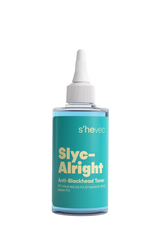


A salicylic acid (BHA) toner is the step that comes straight after cleansing for oily and combination skin where the look of blackheads and pores is the priority. If the order and frequency are not set up correctly, the same step can also bring dryness and sensitivity.
In short: Apply a salicylic acid toner in the evening with a cotton pad to cleansed, thoroughly dried skin, and do not rinse it off; start with the T-zone, then the cheeks. Serum and moisturiser follow. Start with 2–3 evenings a week; if your skin does not feel tight and any stinging fades within a few minutes, increase the frequency gradually. Slyc-Alright contains 2% salicylic acid and 1.2% AHA (alpha hydroxy acid) and contains no alcohol; its pH range is 3.9–4.2.
What is Slyc-Alright used for?
Slyc-Alright focuses on three concerns: blackheads, visible pores and the look of blemish-prone skin. A review of salicylic acid as a peeling agent explains that this acid can exfoliate the skin's outermost layer and has a property aimed at dissolving pore plugs (comedolytic).
- Blackheads: aims to reduce the look of clogged pores by helping clear build-up from the pore opening.
- Pores: as build-up decreases, it helps pores look less visible.
- Blemish-prone skin: contributes to a more balanced-looking surface. Cosmetic product; not intended for medical treatment.
We cover how salicylic acid works inside the pore and why it is called BHA in a separate article: what is salicylic acid, and how does BHA work inside the pore.
How to use a salicylic acid toner, step by step
Apply a salicylic acid toner in the evening to thoroughly dried skin, after cleansing and before serum, starting with the T-zone.
- Cleanse and dry. Wash your face and pat it completely dry with a towel.
- Start with the T-zone. Put the toner on a cotton pad and sweep it first over your nose, chin and forehead, then over your cheeks. If your cheeks tend to get dry, apply it to the T-zone only for a while. Keep away from the eye area and the corners of the mouth.
- Do not rub, do not rinse. Glide the cotton pad over the skin with light pressure; the toner stays on the skin, so wait for it to absorb.
- Continue with serum and moisturiser. Serum first, then a moisturiser suited to your skin type.
- Apply sunscreen every morning. The FDA also recommends sun protection with BHA products. Slyc-Alright also contains a low-concentration AHA complex. AHAs can increase the skin's sensitivity to the sun: apply sunscreen every morning while using this product and for one week after you stop.
Where the two acid groups differ in terms of sun sensitivity: the difference between AHA and BHA.
Can a BHA toner be used every day?
Not every day to begin with: use it on 2–3 evenings a week; whether you move up to every evening depends on your skin's tolerance. Because Slyc-Alright contains AHA as well as salicylic acid, the starting frequency is kept low. If there is no dryness, tightness or prolonged stinging, increase the frequency gradually; if these signs appear, go back to the previous frequency.
| Your skin | To start | After that |
|---|---|---|
| Oily, combination | 2–3 evenings a week | Increase gradually if comfortably tolerated |
| Normal | 2–3 evenings a week | You can stay at this frequency |
| Sensitive | Less often, with a test on a small area first | Increase slowly |
| Dry or very sensitive | For the toner step, Rice Rice Baby Brightening Rice Toner | Contains no AHA or BHA for exfoliation; focuses on radiance, not blackheads |
Can salicylic acid be used in the morning?
Slyc-Alright is designed for evening use; it is not added to the morning routine. The morning steps are cleansing, moisturiser and sunscreen. If you also want a step for the look of pores in the morning, you can use a niacinamide serum instead of an acid: after cleansing and before moisturiser; the morning routine ends with sunscreen.
What does each ingredient in the Slyc-Alright formula do?
Slyc-Alright Salicylic Acid (BHA) Toner gives its two acids separate roles: salicylic acid focuses on build-up in the pore opening, the low-concentration AHA complex on dead cells on the surface; the remaining ingredients play a supporting role.
| Ingredient | Role in the formula |
|---|---|
| 2% salicylic acid (Salicylic Acid) | Key active; build-up in the pore opening |
| 1.2% AHA (low-concentration AHA complex) | Second active; dead cells on the surface, rough-looking texture |
| Zinc PCA, sodium PCA | Supporting ingredients |
| 8D hyaluronic acid | Supporting ingredient; hydration |
| Tasmanian pepper, bay laurel leaf hydrosol | Supporting ingredients |
| pH 3.9–4.2 · 200 ml | Contains no alcohol and no niacinamide |
It is designed for combination, normal and oily skin; Salicylic Acid is fifth in the INCI list.
What to use after a salicylic acid toner, and what not to use on the same evening
Serum and moisturiser follow the toner; do not add a second exfoliant on the same evening.
- Moisturiser: if your skin feels dry, choose a cream with a richer texture.
- Not on the same evening: retinol, other acid toners and peel products. The product warning also states that Slyc-Alright should not be used in the same routine as retinol or other products containing acids.
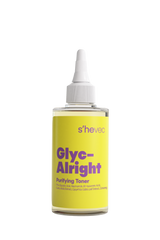
- With Glyc-Alright: if you also use Glyc-Alright Glycolic Acid Toner, do not layer the two toners; use them on different evenings.
A rule of thumb for choosing: if the look of blackheads and pores is your priority, salicylic acid; if uneven tone and radiance are your priority, glycolic acid. Other pore-focused s'hevec products can be found together in our collection of products for visible pores. The difference between acid toners and toners focused on hydration and radiance is explained in the guide to toner types and the skin they suit.
What a salicylic acid toner does not do
- It does not physically make pores smaller. According to a review of facial pores, the main factors that determine pore size are high sebum secretion, loss of elasticity around the pore and the volume of the hair follicle. The toner helps pores look less visible by reducing build-up in the pore opening.
- It does not make sebaceous filaments disappear. Some of the greyish-yellow dots on the nose are the normal contents of the pore and fill up again even after cleansing; the guide to reducing the look of blackheads explains this difference in detail.
- It does not clear deep congestion. Painful, deep or widespread blemishes are not the focus of this toner; do not squeeze them, but show them to your doctor.
- It is not judged on a single application. Changes in the look of blackheads are tracked with regular use.
Who should take care when using a salicylic acid toner?
- Sensitive skin: Before first use, do a patch test on the inner forearm. Then apply the toner to a small area of the face first; leave cheeks that tend to get dry until last.
- People with a salicylate or acetylsalicylic acid (aspirin) allergy: consult your doctor before use.
- Sensitised areas: do not apply to skin that has become sensitised after shaving, waxing or a cosmetic procedure, or to broken skin.
Frequently asked questions
Can you apply Hi Girls Bye Pores after Slyc-Alright?
Yes. Because Slyc-Alright contains no niacinamide, Hi Girls Bye Pores Pore Serum covers the pore and sebum side; on the same evening, apply it after the toner and before moisturiser. If your skin becomes sensitive, you can separate the two products by moving the serum to the morning.
Does Slyc-Alright contain glycolic acid?
In the current formula, glycolic acid is not a key active; it is only part of the low-concentration AHA complex. In the INCI list, Glycolic Acid appears after Salicylic Acid, in a row with Citric, Malic, Lactic, Pyruvic and Tartaric Acid. In the previous formula, glycolic acid was the key active.
Can a BHA toner be used on blemish-prone skin?
Yes. Slyc-Alright is designed to help reduce the look of pores and blackheads on blemish-prone skin. The toner focuses on surface build-up; for blemishes that have not cleared for weeks, are painful or leave marks, see a dermatologist rather than extending your trial of the toner.
Can Slyc-Alright be used on dry skin?
The formula is designed for combination, normal and oily skin; the product warning states that it may cause irritation on dry and sensitive skin. For the toner step on dry skin, you can start with Rice Rice Baby, which is listed in the table above and contains no AHA or BHA for exfoliation, instead of an acid toner; the skin types recommended on its label include dry skin. On combination skin, if your cheeks feel tight or start to flake, stop applying the toner there and continue on the T-zone only; if the tightness does not settle within a few days, stop using it.
Can Slyc-Alright be used during pregnancy?
Slyc-Alright contains 2% salicylic acid and stays on the skin without being rinsed off; salicylic acid belongs to the same salicylate family as acetylsalicylic acid (aspirin). If you are pregnant or breastfeeding, or have a skin condition, consult your doctor before use. At the appointment, show the product's ingredients; if you take medication regularly, mention this as well.
Sources
- U.S. Food and Drug Administration (FDA). Beta Hydroxy Acids.
- Arif T. Salicylic acid as a peeling agent: a comprehensive review. Clin Cosmet Investig Dermatol. 2015.
- Lee SJ et al. Facial Pores: Definition, Causes, and Treatment Options. Dermatol Surg. 2016.
This content is for information only and does not replace medical advice. s'hevec products are cosmetic products and are not intended for medical treatment. It was prepared by the s'hevec Team on the basis of the s'hevec product data library and the sources listed above.


