
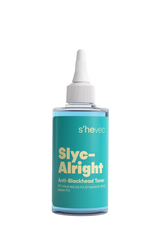
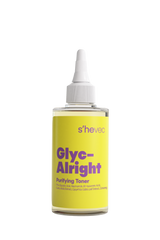


In some routines toner is considered essential; in others it has no place at all. Which is right depends on what is in the bottle and what your skin needs. An acid toner and a brightening toner without exfoliating acids sit in the same step but do different jobs.
In short: Toner is not an essential step; the foundation of a routine is cleansing, moisturising and sun protection during the day. A toner adds an ingredient to this foundation: Glyc-Alright (7% glycolic acid, pH 3.5–4.0) and Slyc-Alright (2% salicylic acid, pH 3.9–4.2) are for exfoliation in the evening; Rice Rice Baby (pH 5.5–6.5) does not exfoliate and is used morning and evening. Do not use two acid toners on the same evening.
What does toner do?
A toner is a leave-on liquid vehicle applied after cleansing; what it does is determined by the active it contains. If it contains an acid, it helps clear dead cells from the surface; if it contains niacinamide or rice extract, it targets an even-looking tone and radiance; if it contains humectants, it gives the skin a first layer of hydration. Its place in the routine is between cleansing and serum.
Do you really need a toner?
No, not every routine needs a toner. A review of active cosmetic products emphasises that the backbone of every skincare routine is cleansing the face and moisturising. The American Academy of Dermatology (AAD) likewise lists applying a sunscreen with “broad spectrum” on its label every day before going outside, washing the face gently and choosing products suited to your skin type among the basic habits; toner is not on this list.
A toner makes a meaningful contribution to your routine if you have one of these needs:
- If you want regular, controlled exfoliation: an acid toner.
- If the look of blackheads and pores is your priority: a salicylic acid toner.
- If you want radiance and an even-looking tone before you are ready for acid products: a brightening toner.
If your routine consists of a cleanser, moisturiser and sunscreen and your skin is happy with it, you do not have to add a toner.
What types of toner are there?
Toners fall into three groups according to the ingredients they contain:
- Acid toner: contains glycolic acid (AHA) or salicylic acid (BHA), exfoliates the surface, is usually used in the evening and can increase sensitivity to the sun.
- Brightening toner without exfoliating acids: targets an even-looking tone and radiance with ingredients such as niacinamide and rice extract; it does not exfoliate.
- Hydrating toner: gives the skin a first layer of hydration with humectant ingredients. There is no separate hydrating toner in the s'hevec range; the ingredient lists of all three toners include forms of hyaluronic acid (e.g. Sodium Hyaluronate), but the main hydration step is serum and moisturiser.
According to the FDA, the degree of exfoliation with products containing AHAs depends on the type of acid, its concentration, the pH of the product and the rest of the formula. This is why, when you weigh up two acid toners, you need to look not only at the concentration but also at the pH.
Which toner suits which skin?
Your skin type and priority decide: Slyc-Alright for blackheads on oily skin, Glyc-Alright for a dull, rough look, and Rice Rice Baby for radiance on dry skin; the skin types recommended on the label of Rice Rice Baby also include sensitive skin.
| Toner | Active and pH | Who it is for | When |
|---|---|---|---|
| Glyc-Alright Glycolic Acid Toner | 7% glycolic acid + 2% niacinamide; pH 3.5–4.0 | Combination, normal, oily; dullness, rough texture, uneven tone | Evening; start with 2–3 evenings a week |
| Slyc-Alright Salicylic Acid (BHA) Toner | 2% salicylic acid + 1.2% AHA; pH 3.9–4.2; alcohol-free | Combination, normal, oily; the look of blackheads and pores | Evening; start with 2–3 evenings a week |
| Rice Rice Baby Brightening Rice Toner | 5% rice extract + 3% niacinamide; pH 5.5–6.5 | Sensitive, dry, normal; radiance, uneven tone | Morning and evening |
Details the table cannot show: Slyc-Alright contains no niacinamide. Rice Rice Baby contains no AHAs or BHA for exfoliation; it contains tranexamic acid and gotu kola. If you cannot decide between AHA and BHA, we set out the difference in our article the difference between AHA and BHA. All three toners are in our face toners collection.
Can you use two toners together?
Yes, if one contains acids and the other contains no exfoliating acids, and they are used at different times of day. Two acid toners, however, are not used on the same evening. A practical arrangement looks like this:
- Morning: Rice Rice Baby, then moisturiser and sunscreen.
- Evening: Glyc-Alright or Slyc-Alright; do not add a peel or retinol on the same evening.
- Both acid toners: Glyc-Alright and Slyc-Alright go on different evenings.
When you use an acid toner in the evening, keep Rice Rice Baby for the morning; two toners are not layered on the same evening. The routine builder sets out your morning and evening order step by step according to your skin type. You can find the application details for the rice toner itself in our article how to use a rice toner.
Should you apply toner with a cotton pad or your hands?
Apply an acid toner with a cotton pad, and Rice Rice Baby with a cotton pad or the palm of your hand. A cotton pad makes it easier to spread an acid product evenly and keep it away from the eye area; on sensitive skin, using your palm avoids the friction of a cotton pad.
- Cleanse and dry your face.
- Put the toner on a cotton pad or in your palm; apply it with a pressing motion, without rubbing, keeping away from the eye area.
- Do not rinse; once it has absorbed, continue with serum and moisturiser.
- Glyc-Alright and Slyc-Alright both contain AHAs. AHAs can increase the skin's sensitivity to the sun: apply sunscreen every morning while using this product and for one week after you stop.
What can't a toner do?
- It does not replace a cleanser; taking off make-up and sunscreen residue is not a toner's job.
- It does not replace a moisturiser; even if its ingredient list contains humectants, do not skip the moisturiser step on dry skin.
- It does not replace sun protection; if the look of dark spots is your priority, a toner cannot do this job on its own.
- It does not correct pitted scars; it works on the skin's surface.
When should you see a doctor?
- If a stinging sensation on the areas where you applied Slyc-Alright does not ease after several minutes, or your skin becomes irritated after every use, stop using the toner and consult your doctor; the FDA recommends seeing a doctor in this situation with cosmetics containing BHA.
- If, after Glyc-Alright or Slyc-Alright, you develop swelling, blisters or burning that does not go away even after you stop using the toner, see your doctor; these reactions are among those reported to the FDA for products containing AHAs.
- If you are allergic to salicylates or acetylsalicylic acid (aspirin), consult your doctor before using a salicylic acid toner.
If you are pregnant or breastfeeding, or have a skin condition, consult your doctor before use.
Frequently asked questions
Can you use water instead of toner?
It does not do the same job: a toner's contribution comes from the active it contains, and water has no such ingredient. If you have no specific need, you can skip the toner step and go straight from cleansing to serum or moisturiser.
Does toner balance the skin's pH?
A toner's pH depends on its formula: the s'hevec acid toners are in the pH 3.5–4.2 range, and Rice Rice Baby in the pH 5.5–6.5 range. We cover how cleansing affects skin pH and how an acid toner relates to this balance in our article what is skin pH.
Can toner make pores smaller?
No, it does not change the structural size of the pore. By helping to clear build-up at the pore opening and dead cells from the surface, an acid toner helps pores look less noticeable.
Should dry skin use a toner?
It is not essential; when skin feels tight, the main step is moisturiser. If you want a toner on dry skin, you can start with Rice Rice Baby, which contains no exfoliating acids, instead of an acid toner.
Can you use an acid toner on sensitive skin?
Try it on a small area first and start at a low frequency; the FDA also recommends testing products containing BHA on a small area before applying them to a large one. If your skin reacts easily, you can start with a toner that contains no exfoliating acids instead of an acid toner.
Sources
- Draelos ZD. Cosmeceuticals: What's Real, What's Not. Dermatol Clin. 2019.
- American Academy of Dermatology (AAD). Healthier-looking skin.
- U.S. Food and Drug Administration (FDA). Alpha Hydroxy Acids.
- U.S. Food and Drug Administration (FDA). Beta Hydroxy Acids.
This content is for information only and does not replace medical advice. s'hevec products are cosmetic products and are not intended for medical treatment. It was prepared by the s'hevec Team on the basis of the s'hevec product data library and the sources listed above.


