
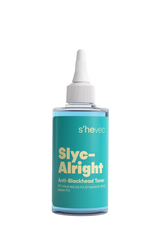
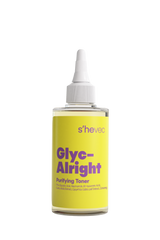


A rice toner is a care step chosen by people who want a radiant, even-toned look and would like to start with a step that contains no exfoliating acids instead of an acid toner. Using it correctly starts with knowing at what time of day and before which product to apply it; on sensitive skin, its order relative to acid toners matters too.
In short: Apply a rice toner to cleansed skin morning and evening with a cotton pad or the palms of your hands, and do not rinse it off; serum, moisturiser and, in the morning, sunscreen follow. Rice Rice Baby contains 5% rice extract and 3% niacinamide, as well as tranexamic acid; its pH range is 5.5–6.5 and it contains no AHA or BHA for exfoliation. Sensitive skin is also among the skin types recommended on its label; you can start with Rice Rice Baby instead of an acid toner, trying it on a small area first.
How to use a rice toner
A rice toner is the first care step after cleansing: it is applied to clean skin, pressed in and not rinsed off.
- Cleanse. Wash your face with a gentle cleanser; Magic Foam Party Foaming Face Cleanser is used morning and evening; the skin types recommended on its label include sensitive skin.
- Apply the toner. Put a few drops on a cotton pad, or pour them into your palm and press them onto your face. On sensitive skin, the palm method avoids friction from the cotton pad.
- Press it in; do not rinse. Work it into the skin with light touches; the toner stays on the skin.
- Continue with serum and moisturiser. If you want to continue the rice step with a serum, Rice You Up Brightening Serum with Niacinamide and Rice Extract comes after the toner and before moisturiser; where the serum fits in the morning and evening is explained in the rice serum guide.
- Finish with sunscreen in the morning. If your focus is uneven tone and the look of dark spots, daytime sun protection is part of your care.
Can a rice toner be used morning and evening?
Yes; Rice Rice Baby can be used morning and evening, and it is the only s'hevec toner that can be used this way, because Glyc-Alright and Slyc-Alright are used in the evening. Since it contains no exfoliating acids, the “start with a few evenings a week” rule for acid toners does not apply to this toner.
| Step | Morning | Evening |
|---|---|---|
| Cleanse | Magic Foam Party | Magic Foam Party |
| Toner | Rice Rice Baby | Rice Rice Baby or an acid toner |
| Serum | Glow Me Like You Do (vitamin C derivative serum) | Rice You Up (optional) |
| Moisturiser | Moisturiser | Moisturiser |
| Protection | Sunscreen | — |
In the morning, apply Rice Rice Baby before Glow Me Like You Do. If you use an acid toner in the evening, do not layer the two toners: keep the acid toner for the evening and Rice Rice Baby for the morning.
What does a rice toner do?
A rice toner is used to support a more radiant, even-toned look without exfoliating the skin. In Rice Rice Baby, rice extract supports hydration and radiance, and niacinamide supports an even-looking tone. Tranexamic acid is a synthetic derivative of the amino acid lysine and is used in care aimed at the look of uneven tone.
A literature review of rice-derived components (phenolic compounds, betaine, tricin, rice bran) reports that these ingredients have moisturising and brightening properties and are generally well tolerated. Most of the findings relate to individual components; they do not translate directly into results for a whole product. We discuss the limits of the evidence and how homemade rice water differs from a formulated product in our article on rice extract and skincare.
What's in the Rice Rice Baby formula?
Rice Rice Baby Brightening Rice Toner is a leave-on care toner. The serum and the peel-off mask from the same rice extract family sit alongside it in our rice range.
| Feature | Rice Rice Baby |
|---|---|
| Key actives | 5% rice extract + 3% niacinamide |
| Also contains | Tranexamic acid |
| Supporting ingredient | Centella asiatica (gotu kola) |
| pH | 5.5–6.5 |
| Exfoliating acids | No AHA or BHA for exfoliation |
| Skin type | Sensitive, dry, normal |
| Use | Morning and evening; leave-on · 200 ml |
Does the rice toner's label include sensitive skin?
The skin types recommended on the label of Rice Rice Baby are sensitive, dry and normal skin. Even so, not all sensitive skin reacts in the same way; begin by trying it on a small area. Its pH range (5.5–6.5) is well above that of s'hevec acid toners such as Glyc-Alright (3.5–4.0) and Slyc-Alright (3.9–4.2).
In a study of facial care products labelled for sensitive skin, niacinamide was the most frequently used active and stood out as one of the few ingredients that had been studied in volunteers with sensitive skin. The same study also notes that research in this area is scarce and methodologically limited.
A sequence you can follow on sensitive skin before moving on to an acid toner:
- Test. The American Academy of Dermatology (AAD) recommends trying a new product for several days on a small area where it will not be wiped off before using it on your face; the steps are in our guide how to do a patch test.
- Start with Rice Rice Baby. Use it morning and evening, and do not add any other new product during this period.
- If it is tolerated, add the acid toner in the evening. Glyc-Alright and Slyc-Alright are formulated for combination, normal and oily skin; start with a few evenings a week, and keep Rice Rice Baby for the morning. AHAs can increase the skin's sensitivity to the sun: apply sunscreen every morning while using this product and for one week after you stop.
How quickly to move on to acid products and how to space out new actives are covered in the step-by-step starting plan for sensitive skin.
What a rice toner does not do, and who should take care
Rice Rice Baby is not an exfoliant and will not make an existing dark spot disappear within a short time; set your expectations within these limits.
- It does not exfoliate. If you are looking for a step that helps clear dead cells from the surface, you need an acid toner or a peel.
- It does not handle dark spots on its own. For the look of dark spots, regular use and sun protection every morning are needed together.
- Stop if you react. Because the toner stays on the skin, if stinging or redness starts after you apply it, do not wait: wash your face with water and do not apply any other active that day; if the reaction recurs, stop using it. Do not apply it to irritated skin. If redness or burning does not settle within days even though you have stopped the toner, the cause may go beyond a product reaction; see a dermatologist to find out why.
Frequently asked questions
Does Rice Rice Baby contain acids?
It contains no exfoliating acids; there is no AHA or BHA for exfoliation in the formula. Tranexamic acid, which has “acid” in its name, is an amino acid derivative; it is not used as an exfoliant that clears away dead cells.
Can a rice toner be used with a niacinamide serum?
Yes. Rice Rice Baby already contains 3% niacinamide; if you also use a separate niacinamide serum, apply it after the toner and before moisturiser.
Can a rice toner be used on oily skin?
The skin types recommended on the label of Rice Rice Baby are sensitive, dry and normal skin. On oily and combination skin, if the look of blackheads and pores is your priority, Slyc-Alright, which contains salicylic acid (BHA), addresses this need more directly; the two toners can be used at different times.
Can Rice Rice Baby be applied around the eyes?
No. The toner is not applied to the eye area; avoid contact with the eyes.
Can Rice Rice Baby be used during pregnancy?
Rice Rice Baby contains niacinamide and tranexamic acid. If you are pregnant or breastfeeding, or have a skin condition, consult your doctor before use.
Sources
- Zamil DH et al. Dermatological uses of rice products: Trend or true? J Cosmet Dermatol. 2022.
- Ferreira MS et al. Sensitive skin: Active ingredients on the spotlight. Int J Cosmet Sci. 2022.
- Gaćina K et al. The use of tranexamic acid in dermatology. Acta Clin Croat. 2023.
- American Academy of Dermatology (AAD). How to test skin care products.
This content is for information only and does not replace medical advice. s'hevec products are cosmetic products and are not intended for medical treatment. It was prepared by the s'hevec Team on the basis of the s'hevec product data library and the sources listed above.


