


In combination skin, the T-zone – the forehead, nose and chin – can be shiny while the cheeks stay normal or dry. Applying the same product at the same intensity to the whole face therefore strains one of the two zones; a combination skin care routine is based on placing products by zone.
In short: In combination skin, the zone rule applies: cleanser, moisturiser and sunscreen on the whole face; acid toner, pore serum and peel-off mask on the T-zone first; an extra hydrating serum on the cheeks only. A single lightweight, water-based moisturiser is usually enough. Acid toner starts on a few evenings a week and on the T-zone, and is used less often on the cheeks. The last step of the morning is an SPF 50+ sunscreen on the whole face, cheeks included.
What is combination skin?
Combination skin means that features of oily skin appear on one part of the face and features of normal or dry skin on another; the typical pattern is an oily T-zone with normal or dry cheeks. Oily skin is defined as skin that looks shiny and greasy because large oil glands produce excess sebum; in combination skin, this look does not extend to the whole face. On the cheeks, on the other hand, tightness, dullness or patchy flaking can appear. You can tell whether only your forehead, nose and chin are shiny by waiting after cleansing without applying any product, comparing the T-zone with the cheeks and repeating this for a few days; the steps are set out in the guide to observing your skin type at home.
What do “combination to oily” and “combination to dry” mean, and how does care change?
These terms are not an official skin type; they describe which end combination skin sits closer to. A study that measured sebum at five points on the face over one year found that the forehead, nose and chin produce more sebum than the cheeks, that the highest values were seen in summer and that there was seasonal variation in both the T-zone and the cheek area. The same study also notes that skin types have so far mostly been determined by people's own assessment and that there is no objective standard measurement. In other words, combination skin can shift towards oily or dry with the seasons:
| Direction | What you see | What changes in the routine |
|---|---|---|
| Combination to oily | Shine spreads from the T-zone to the cheeks as well | Acid toner can gradually extend to the whole face; an extra hydrating serum may not be needed; a matte-finish sunscreen in the morning |
| Combination to dry | Tightness and flaking on the cheeks increase, and the T-zone is less shiny | Acid toner only on the T-zone and less often; a hydrating serum on the cheeks and a more generous layer of moisturiser |
This shift may not mean that your skin type has changed; it may be the effect of the season or of your routine. Observe the change for a few weeks and adjust your routine gradually.
Which product goes where on combination skin?
Cleansing, hydration and sun protection go on the whole face, actives aimed at shine go on the T-zone first, and an extra hydrating layer goes on the cheeks only.
| Zone | Priority | Example at s'hevec | Application note |
|---|---|---|---|
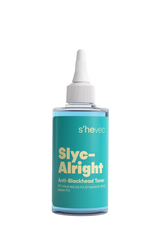
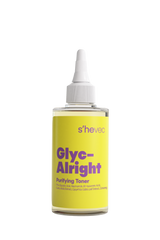
| T-zone (forehead, nose, chin) | The look of shine, pores and blackheads | Glyc-Alright or Slyc-Alright (evening), Hi Girls Bye Pores, Rice Vibes Only | Acid toner and mask are tried here first |
| Cheeks | Hydration and comfort | Hydra Back Baby and, if needed, a thin second layer of Any Time Of Day | Acid toner less often or not at all |
| Whole face | Cleansing, hydration, sun protection | Magic Foam Party Foaming Face Cleanser, Any Time Of Day, Matte's Up? SPF 50+ Mattifying Sunscreen | Sunscreen including the cheeks, neck and ears |
If your whole face is shiny, an oily skin care routine is a better starting point; if your whole face feels tight and dry, a dry skin care routine is. For combination skin, only the steps of these two routines that apply to the relevant zone are used.
What should a morning and evening routine for combination skin look like?
The same basic products are used morning and evening; acid toner and a weekly mask are added in the evening, and the morning ends with sunscreen. For an order based on your own priorities, you can use the routine builder.
| Step | Morning | Evening | Where |
|---|---|---|---|
| 1. Cleanse | Magic Foam Party | Magic Foam Party | Whole face |
| 2. Toner | None | Glyc-Alright or Slyc-Alright, starting with a few evenings a week | T-zone first |
| 3. Serum | Hi Girls Bye Pores | Hydra Back Baby | Pore serum starting from the T-zone; hydrating serum on the cheeks or the whole face |
| 4. Moisturiser | Any Time Of Day | Any Time Of Day | Whole face; a thin second layer on the cheeks if needed |
| 5. Sunscreen | Matte's Up? SPF 50+ | None | Whole face, neck and ears |
| Weekly | None | Rice Vibes Only, 1–2 times a week, on an evening without acid toner | T-zone only |
Glyc-Alright Glycolic Acid Toner contains 7% glycolic acid and 2% niacinamide, and its pH range is 3.5–4.0. AHAs can increase the skin's sensitivity to the sun: apply sunscreen every morning while using this product and for one week after you stop. In the daily steps of this routine, niacinamide is found in five products (Magic Foam Party, Glyc-Alright, Hi Girls Bye Pores, Any Time Of Day, Matte's Up?), and the weekly mask Rice Vibes Only contains it too. For this reason, add the products to your routine one at a time; if redness appears, first reduce how often you use the pore serum.
The balance between the zones can shift with the seasons: oiliness can increase in hot, humid weather, and the cheeks can feel tighter in cold, dry weather. We explain how to update your routine for the season in our article on skincare when the seasons change.
Does combination skin need two different moisturisers?
For most combination skin, it does not: a single lightweight, water-based moisturiser is applied to the whole face; if the cheeks need more moisture, a hydrating serum is added under the moisturiser on that area only. Hydra Back Baby contains 2% 8D hyaluronic acid and 1.2% Pentavitin; 3–4 drops are applied to slightly damp skin. A hydrating serum does not replace a moisturiser: a cream layer on top is needed to hold in the moisture that the humectants draw in.
How do you choose a moisturiser for combination skin?
A moisturiser for combination skin should be light enough not to feel heavy on the T-zone and contain enough humectants to hold moisture on the cheeks.
- Texture: lightweight and water-based. A review of moisturisers notes that there are large differences between creams and that greasy formulations can feel uncomfortable to users.
- Ingredients: humectants. The American Academy of Dermatology (AAD) lists glycerin and hyaluronic acid among the ingredients to look for in creams for dry skin.
- Application: the AAD recommends applying moisturiser while the skin is still damp and whenever it feels dry; on combination skin, top-ups during the day can be limited to the cheeks.
Any Time Of Day Water-Based Moisturising Cream is silicone-free; it contains 5% niacinamide and 2% 8D hyaluronic acid and was developed for all skin types. All products labelled for this skin type are collected under skincare for combination skin.
Where should acid toner and a peel-off mask go on combination skin?
Both go on the T-zone first; acid toner moves to the cheeks only if the skin is comfortable, and less often, while the peel-off mask stays on the T-zone only.
Apply the acid toner with a cotton pad to the forehead, nose and chin; if there is no tightness, stinging or flaking on the cheeks, gradually extend it to the whole face. If the look of blackheads is your priority, Slyc-Alright, which contains 2% salicylic acid, is used instead of Glyc-Alright or on different evenings; the two toners are not layered on the same evening.
Rice Vibes Only (3% rice extract, 3% niacinamide) is applied in a thick, even layer to the forehead, nose and chin, leaving out the areas around the eyes, eyebrows and lips and any hairy areas. Once the film has dried, in 15–20 minutes, it is lifted by the edges and peeled off slowly. Peeling it off is not chemical exfoliation and does not replace acid toner; acid toner is not added on a mask evening.
What does combination skin care not do?
- It does not stop oil production in the T-zone; it helps manage the look of shine.
- It does not change the structural size of pores.
When should you see a doctor?
- If redness, flaking or itching on the cheeks does not go away even though you have stopped using acid toner there and moisturise regularly, the cause may not be dryness alone; see your doctor to find out what it is. The AAD also recommends seeing a dermatologist for persistent dryness.
- If burning or stinging continues even though you have stopped using the product, consult your doctor; the AAD also recommends telling a dermatologist about burning, stinging or irritation caused by a product applied to the skin.
- If you are pregnant or breastfeeding, or have a skin condition, consult your doctor before use. In that conversation, mention that you want to add a glycolic or salicylic acid toner to this routine.
Frequently asked questions
Can combination skin use products for oily skin?
It can, but by zone. Products whose labels also list combination skin can be tried on both zones; products that cause tightness on the cheeks are limited to the T-zone.
Does the T-zone need a separate, stronger cleanser?
It does not; a harsh cleanser can dry out the cheeks along with the shiny zone. If your cheeks feel tight after washing, use less product and lukewarm rather than hot water.
Is pore serum applied to the T-zone only?
Apply 3–4 drops of Hi Girls Bye Pores and spread them over the whole face, starting from the T-zone and the sides of the nose; do not apply it around the eyes. On skin that feels dry, it is used once a day and followed by a moisturiser.
What should you do if your cheeks flake after acid toner?
Stop using the toner on your cheeks and use it only on the T-zone and less often; add a hydrating serum and a moisturiser to your cheeks. If stinging or burning persists, stop using the toner.
Sources
- Sakuma TH et al. Oily skin: an overview. Skin Pharmacol Physiol. 2012.
- Lodén M. Role of topical emollients and moisturizers in the treatment of dry skin barrier disorders. Am J Clin Dermatol. 2003.
- American Academy of Dermatology (AAD). Dermatologists’ top tips for relieving dry skin.
- Youn SW et al. Regional and seasonal variations in facial sebum secretions: a proposal for the definition of combination skin type. Skin Res Technol. 2005.
This content is for information only and does not replace medical advice. s'hevec products are cosmetic products and are not intended for medical treatment. It was prepared by the s'hevec Team on the basis of the s'hevec product data library and the sources listed above.


