


The first question anyone who buys an acid toner or a peel asks is how often to use it. A toner that is left on the skin and a peel that is rinsed off after a few minutes are not used on the same schedule.
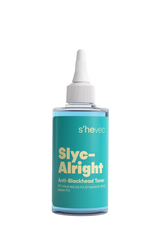
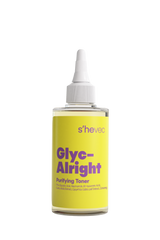
In short: How often to do a chemical peel at home depends on the type of product. With leave-on acid toners (Glyc-Alright pH 3.5–4.0; Slyc-Alright pH 3.9–4.2), start with 2–3 evenings a week. The rinse-off AHA/BHA peel Red Of Love is used on no more than 2 evenings a week, left on for 5–10 minutes and rinsed off with plenty of water. Two acid products are not applied on the same evening. AHAs can increase the skin's sensitivity to the sun: apply sunscreen every morning while using this product and for one week after you stop.
How often should you peel?
To begin with, an acid toner is used on 2–3 evenings a week and a rinse-off AHA/BHA peel on no more than 2 evenings a week; the advanced-level rinse-off peel is used on no more than one evening a week. The reason, as the FDA states, is that in products containing AHAs the degree of exfoliation depends on the type of acid, its concentration, the pH of the product and the other ingredients in the formula.
| Product type | s'hevec product | How it is applied | Starting frequency |
|---|---|---|---|
| Acid toner | Glyc-Alright Glycolic Acid Toner: 7% glycolic acid (AHA) | Evening, with a cotton pad; not rinsed off | 2–3 evenings a week, increased as tolerated |
| Acid toner | Slyc-Alright Salicylic Acid (BHA) Toner: 2% salicylic acid | Evening, with a cotton pad; not rinsed off | 2–3 evenings a week, increased gradually |
| Rinse-off peel | Red Of Love 10% AHA + 2% BHA Peel Serum: glycolic and lactic acid with salicylic acid, pH 3.6–3.9 | Evening; rinsed off with plenty of water after 5–10 minutes | No more than 2 evenings a week |
| Advanced-level rinse-off peel | Red Velvet Face | Evening; rinsed off with plenty of water after 5–10 minutes. Box warning: “For professional use only.” | No more than 1 evening a week |
The skin types recommended on the labels of Glyc-Alright, Slyc-Alright and Red Of Love are combination, normal and oily skin; if Glyc-Alright or Red Of Love is used on dry skin, the product pages recommend 1–2 evenings a week. The frequencies in the table match the product directions exactly; do not exceed the number of uses stated on the label.
Acid toner or rinse-off peel?
The choice depends on your skin's priority and how long the acid stays on the skin: a toner is left on, a peel is rinsed off. All the options of both types are brought together in products with AHA and BHA.
- If the look of blackheads and clogged pores is your priority: Slyc-Alright. It is an evening toner without alcohol, made for the look of blackheads on the nose, chin and forehead.
- If rough texture, dullness and uneven tone are your priority: Glyc-Alright. The niacinamide in the formula covers the look of pores and tone in the same step.
- If you do not want to leave acid on your skin: Red Of Love. It is for a renewed, radiant look of the skin's surface; people who are new to acids can also start here at a low frequency.
- On very sensitive skin: instead of an acid product, you can start with Rice Rice Baby, which contains no AHA or BHA for exfoliation.
How do you increase the frequency of peeling?
Once your skin tolerates the starting level without problems, increase it by adding one evening at a time; the product directions set where to stop.
- Start with one product. Add only one acid product to your routine at a time.
- Try it on a small area first. Try a new acid product on a small area before using it on the whole face; the steps of a patch test at home are explained separately.
- Add one evening. If there is no dryness, tightness or stinging that lasts into the next day, add one acid evening the following week; if your skin feels sensitive, space the evenings further apart.
- Stop at the limit in the directions. Do not use Red Of Love on more than 2 evenings a week; with toners, increase the frequency one evening at a time, as long as your skin stays comfortable.
On skin that is irritated, sunburnt or has recently had a procedure, skip that week's acid evenings; once the skin has settled, continue the schedule where you left off. AHAs can increase the skin's sensitivity to the sun: apply sunscreen every morning while using this product and for one week after you stop. This sensitivity is explained in detail in the article on glycolic acid and sun sensitivity.
Can you use more than one acid in the same week?
You can, but split across different evenings: two acid products are not layered on the same evening. Glyc-Alright and Slyc-Alright, or an acid toner and Red Of Love, go on separate evenings. Red Velvet Face is used on no more than one evening a week, and no other acid product is used in the week it is applied; its box states “For professional use only.” Do not use Red Of Love and Red Velvet Face together.
The example week is for combination or normal skin that already uses both products separately without problems; on dry and sensitive skin, reduce the number of acid evenings.
| Evening | Acid step | Afterwards |
|---|---|---|
| Monday | Glyc-Alright or Slyc-Alright | Moisturiser |
| Tuesday | No acid | Hydration and barrier support |
| Wednesday | Red Of Love (rinse-off peel) | Moisturiser; no toner that evening |
| Thursday | No acid | Hydration and barrier support |
| Friday | Glyc-Alright or Slyc-Alright | Moisturiser |
| Saturday and Sunday | No acid | Hydration and barrier support |
A peel evening step by step: how to apply a rinse-off AHA/BHA peel.
How can you tell you are over-exfoliating, and what should you do?
Stinging or burning that does not go away, long-lasting redness, noticeable peeling, dryness and tightness show that exfoliation is too much for the skin. The reactions reported to the FDA in connection with AHA products also include burning, rash, swelling, changes in skin colour, blistering and itching; the FDA notes that more serious reactions were seen most often with “skin peeler” products that give the highest level of exfoliation. That is why a rinse-off peel is used less often than a toner.
- Gently wash the product off; the AAD recommends applying a cold compress or petroleum jelly if needed.
- Take a break from all acid products; reduce your routine to a gentle cleanser, moisturiser and sunscreen.
- If your skin reacted noticeably, stop using the acid product that caused the reaction. If there is only mild dryness or tightness, you can start again with one product and less often once your skin has settled.
What is the difference between an at-home peel and an in-clinic peel?
An acid product used at home gives repeated exfoliation limited to the top layer of the skin; an in-clinic peel, by contrast, is a procedure that a doctor chooses and carries out after assessing the skin, and according to a review, AHAs fall into the category of cosmetic product or medical device depending on the concentration used.
Red Velvet Face is a cosmetic product; its box states “For professional use only.” How it differs from Red Of Love is covered in our guide to high-strength AHA/BHA peels.
When should you see a doctor?
See a doctor if irritation continues even though you have stopped using the acid product, or if the reaction is severe.
- If stinging after Slyc-Alright or Red Of Love, which contain salicylic acid, does not go away after the application, stop using the product and consult your doctor.
- The AAD recommends seeing a dermatologist if a reaction to a product is severe and does not ease with a cold compress or petroleum jelly.
- If you are allergic to salicylates or acetylsalicylic acid (aspirin), consult your doctor before starting products that contain salicylic acid.
- If you are pregnant or breastfeeding, or have a skin condition, consult your doctor before use. In that conversation, mention the acid product you want to add to your routine.
Frequently asked questions
Does peeling more often give faster results?
No. Going beyond the recommended frequency does not speed up results; track progress while sticking to the frequency in the directions and using sun protection regularly.
Can an acid toner or peel be used in the morning?
Glyc-Alright, Slyc-Alright and Red Of Love are for evening use. The morning routine ends with sunscreen.
Can a peel and retinol be used in the same week?
They can, if they are kept to different evenings; retinol is not combined with an acid toner or a peel on the same evening.
Should a skipped acid evening be made up the next day?
No. A skipped evening is not added to the next day as an extra acid evening; the schedule continues from the next planned evening.
Can a peel be applied around the eyes?
No. Acid toners and peels are kept away from the areas around the eyes and lips. In case of contact with eyes, rinse thoroughly with water.
Sources
- U.S. Food and Drug Administration (FDA). Alpha Hydroxy Acids.
- U.S. Food and Drug Administration (FDA). Beta Hydroxy Acids.
- Babilas P et al. Cosmetic and dermatologic use of alpha hydroxy acids. J Dtsch Dermatol Ges. 2012.
- American Academy of Dermatology (AAD). How to test skin care products.
This content is for information only and does not replace medical advice. s'hevec products are cosmetic products and are not intended for medical treatment. It was prepared by the s'hevec Team on the basis of the s'hevec product data library and the sources listed above.


