
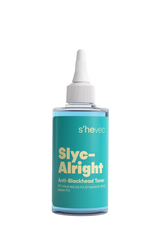
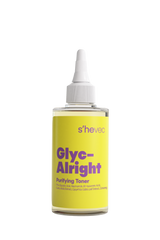


Liquorice root extract is a plant-derived supporting ingredient found in three s'hevec formulas aimed at the look of dark spots and uneven tone. Here, we separate what it does from what it does not do.
In short: Liquorice root extract (INCI: Glycyrrhiza Glabra Root Extract) is obtained from the root of the liquorice plant; glycyrrhizic acid is considered its main biologically active compound. Its derivatives are often used in products for sensitive skin, but our sources contain no strong human studies showing its effect on the skin. In Glyc-Alright, Hit The Spot and Shine On You, it is a supporting ingredient with no stated concentration; for the look of uneven tone, the main work is done by key actives such as 2% tranexamic acid, 2% alpha arbutin and 7% azelaic acid.
What is liquorice root extract?
Liquorice root extract is obtained from the roots and rhizomes of the liquorice plant (Glycyrrhiza species). Among its many compounds (triterpene saponins, flavonoids), glycyrrhizic acid is generally considered the main biologically active compound. In cosmetics, derivatives such as glycyrrhetinic acid and dipotassium glycyrrhizinate are also used alongside the extract.
What does liquorice root extract do for the skin?
It is used as a supporting ingredient in soothing skincare; our sources contain no strong human data on its effect on the skin, and the available data cannot be carried over directly to a finished product:
- Pharmacological data: a review reports that various pharmacological properties, including antioxidant activity, have been proposed for liquorice root. Its context is research on herbal medicine and pharmacology, not cosmetic formulas.
- Laboratory data: dipotassium glycyrrhizinate mixed with allantoin, bisabolol and D-panthenol reduced mediators linked to redness, such as PGE2, in cultures of skin cells exposed to UVB, and showed an antioxidant effect. The data relate to a cell culture and to the mixture.
Can liquorice root extract be used on sensitive skin?
Liquorice root derivatives are common in products for sensitive skin; however, our sources contain no studies with volunteers who have sensitive skin. In a study examining pharmacy products labelled “sensitive skin”, glycyrrhetinic acid and its derivatives were among the most frequently used ingredients.
In the s'hevec range, use on sensitive skin is determined by the key active and the label: the skin types recommended on the labels of Glyc-Alright, Hit The Spot and Shine On You are combination, normal and oily skin; for sensitive skin, the pages of all three products recommend a low frequency and a patch test.
Does liquorice root extract help with the look of uneven tone?
Our sources contain no direct findings on its effect on skin tone, so we do not give it a tone-evening role. The division of work in the three formulas:
| Product | Key actives (concentration on the pack) | Look it focuses on |
|---|---|---|
| Glyc-Alright | 7% glycolic acid + 2% niacinamide | Uneven tone, pores, radiance |
| Hit The Spot | 2% tranexamic acid + 2% alpha arbutin | Dark spots and uneven tone |
| Shine On You | 7% azelaic acid + 3% niacinamide | Dark spots and redness |
In the INCI lists of all three products, Glycyrrhiza Glabra Root Extract comes after the key actives. The choice depends on the key active that suits your needs: Glyc-Alright Glycolic Acid Toner, Hit The Spot Dark Spot Serum or Shine On You Azelaic Acid Cream. How to use them is covered in the product guides: glycolic acid toner, tranexamic acid and alpha arbutin serum, and azelaic acid cream. These three products, and others aimed at the same goal, can be found in our collection of products for the look of dark spots.
Does liquorice root extract have side effects, and who should take care?
Our sources contain no tolerance information specific to liquorice root extract applied to the skin; the data on unwanted effects in the review relate to pharmacological use. General safety steps:
- Try it on a small area first: the AAD recommends testing a new product on a small area for a few days before using it on the face. Because liquorice root extract is combined with strong key actives in these formulas, if redness, swelling or itching that does not go away appears on the test area, wash off the product and stop using it, without trying to pin the reaction on a single ingredient.
- If you react to fragrance: the AAD notes that products with plant ingredients can also contain fragrance-related ingredients.
- Irritated skin: do not apply to broken or irritated skin.
In these three products, liquorice root extract does not come on its own but together with key actives. If you are pregnant or breastfeeding, or have a skin condition, consult your doctor before use. In that conversation, mention the key actives in the product.
Frequently asked questions
What does Glycyrrhiza glabra mean?
Glycyrrhiza is the Latin genus name of the liquorice plant, and glabra is one of the species in this genus. The “Root Extract” part of the name on the label shows that the extract is obtained from the root.
Are dipotassium glycyrrhizinate and liquorice root extract the same thing?
No. Dipotassium glycyrrhizinate is a derivative obtained from liquorice root and listed on labels under its own name. s'hevec formulas contain the root extract, not the derivative, and the laboratory data above cannot be transferred to the extract either.
Can liquorice root extract be used with glycolic acid or niacinamide?
In the s'hevec range, they are already in the same formula: in Glyc-Alright with glycolic acid and niacinamide, and in Shine On You with azelaic acid and niacinamide. The rule is set by the key active: Glyc-Alright is not layered with another strong exfoliant on the same evening.
Does liquorice root extract make the skin sensitive to the sun?
Our sources contain no information on sun sensitivity linked to liquorice root extract. Glyc-Alright, however, contains an AHA. AHAs can increase the skin's sensitivity to the sun: apply sunscreen every morning while using this product and for one week after you stop.
Sources
- Asl MN et al. Review of pharmacological effects of Glycyrrhiza sp. and its bioactive compounds. Phytother Res. 2008.
- Ferreira MS et al. Sensitive skin: Active ingredients on the spotlight. Int J Cosmet Sci. 2022.
- Tan C et al. The combination of allantoin, bisabolol, D-panthenol and dipotassium glycyrrhizinate mitigates UVB-induced PGE(2) synthesis by keratinocytes. Int J Cosmet Sci. 2024.
- American Academy of Dermatology (AAD). How to test skin care products.
This content is for information only and does not replace medical advice. s'hevec products are cosmetic products and are not intended for medical treatment. It was prepared by the s'hevec Team on the basis of the s'hevec product data library and the sources listed above.


