


A label that says “hyaluronic acid” does not tell you which form or which molecular weight is in the product. This difference is often why two products with the same name behave differently on the skin.
In short: Hyaluronic acid is a glycosaminoglycan that is also found in the body and attracts water; in cosmetics it is used as a humectant and does not exfoliate the skin. Molecular weight determines penetration into the skin: forms in the 20–300 kDa range pass through the uppermost layer of the skin, while forms in the 1000–1400 kDa range do not. 8D hyaluronic acid is a blend of eight forms separated by molecular weight and type; it is a key active in Hydra Back Baby and Any Time Of Day.
| INCI name | Forms such as Hyaluronic Acid, Sodium Hyaluronate, Hydrolyzed Hyaluronic Acid |
|---|---|
| What it does | Humectant; a more hydrated, plumper look |
| Who it is for | All skin types |
| When | Can be used morning and evening |
| Exfoliation | None; it does not exfoliate the skin |
| At s'hevec | Key active in Hydra Back Baby (serum) and Any Time Of Day (cream); concentrations in the table below |
What is hyaluronic acid?
Hyaluronic acid is a glycosaminoglycan made up of N-acetylglucosamine and D-glucuronic acid units; it is also known as hyaluronan or hyaluronate. It was first obtained from the vitreous humour of the eye; it is found in all vertebrates, including humans, and is an important component of the extracellular matrix in the skin.
What does hyaluronic acid do?
Because of its water-attracting (hygroscopic) structure, hyaluronic acid is used in cosmetics as one of the key ingredients in hydration care. Humectants draw water from the lower layer of the skin into the epidermis; they work differently from the oily occlusives that cover the skin's surface. What you see is skin that feels more hydrated, comfortable and plump.
Why does molecular weight matter, and should you choose low or high?
Molecular weight determines how far hyaluronic acid can penetrate the skin; the two groups behave differently, and neither is “better”. In a study using Raman spectroscopy on human skin sections:
- Low-molecular-weight (20–300 kDa) hyaluronic acid passed through the stratum corneum, the uppermost layer of the skin.
- High-molecular-weight (1000–1400 kDa) hyaluronic acid did not pass through this layer.
A review also stresses that molecular weight affects both skin penetration and biological activity. These data concern penetration; they do not show which form gives which visible result. When choosing, the real question is not “low or high” but which forms are combined in the formula.
What is 8D hyaluronic acid?
8D hyaluronic acid is a blend of eight forms of hyaluronic acid that differ from one another by molecular weight and type; in s'hevec formulations it is used as a raw material with the trade name MoistShield HA. This variety is why the complex is designed to hold moisture in different layers of the skin.
The trade name does not appear on the packaging; each form is listed under its own INCI name, for example Sodium Hyaluronate or Hydrolyzed Hyaluronic Acid. We explain how to tell these names apart in the list in our article how to read an INCI list.
To be clear about the limits: we do not claim product-level data on what each form does separately in the skin, or a measured hydration value.
Hyaluronic acid in s'hevec products
Hyaluronic acid is a key active in two products and a supporting ingredient without a stated concentration in many other products. Hydration-focused serum, cream and sunscreen are brought together in our moisturisers collection.
| Product | Key actives | Texture and use |
|---|---|---|
| Hydra Back Baby | 2% 8D hyaluronic acid + 1.2% Pentavitin | Serum; morning and evening |
| Any Time Of Day | 5% niacinamide + 2% 8D hyaluronic acid | Water-based cream without silicones; morning and evening |
| Glow Me Like You Do | 7% Ethyl Ascorbic Acid (3-O-ethyl ascorbic acid); 8D as support | Serum; morning |
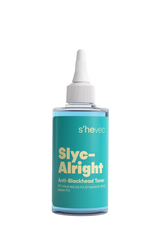
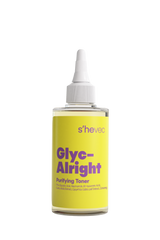
Hydra Back Baby Hydrating Serum adds Pentavitin (saccharide isomerate), panthenol and Acacia senegal to 8D hyaluronic acid. Any Time Of Day Water-Based Moisturising Cream brings hydration and niacinamide together in the same cream. In Glow Me Like You Do Vitamin C Serum, 8D hyaluronic acid plays a supporting role. It is also a supporting ingredient without a stated concentration in Glyc-Alright, Slyc-Alright, Rice Rice Baby, Hi Girls Bye Pores, Hit The Spot, Smooth Me All Night, Power De-Puff Girls, Firm Baby Firm, Shine On You, Rice Vibes Only, Magic Foam Party, Mic Drop and Just Protected From Sun; hyaluronic acid derivatives also appear in the ingredient lists of Love In Blue This Time, Rice You Up and the two AHA/BHA peels.
We cover which step the serum goes in, whether to apply it to damp skin, daily use and its order with niacinamide in our guide how to use a hyaluronic acid serum.
Does hyaluronic acid exfoliate the skin, and what does it not do?
No; hyaluronic acid is not an exfoliant but a humectant. The “acid” in its name does not indicate exfoliation: unlike glycolic or salicylic acid, it does not help shed dead cells from the surface.
- It does not replace a moisturiser: it attracts water, and a moisturiser is needed on top to keep that moisture in.
- It is not an active designed for the look of dark spots or uneven tone; nor is it a sunscreen.
- It does not fill deep lines; a plumper look relates to hydration levels and does not promise the same result as injectable filler procedures.
Does hyaluronic acid have side effects, and who should take care?
Topical hyaluronic acid is reported to be well tolerated; a review states that studies point in this direction. This does not mean that no skin will ever react.
- Sensitive skin: Before first use, do a patch test on the inner forearm. If sensitivity develops, take a break from using it.
- Irritated or broken skin: do not apply to these areas; keep the product away from the eyes.
- People who take medication regularly: consult your doctor before use.
- Doctor's advice: If you are pregnant or breastfeeding, or have a skin condition, consult your doctor before use.
If dryness, itching or cracking persists despite these recommendations, do not just keep moisturising and wait. When it does not improve with a humectant, it may be due to a cause other than a lack of moisture; see your doctor to understand the source of the dryness.
Frequently asked questions
Are sodium hyaluronate and hyaluronic acid the same thing?
They belong to the same family of molecules. Sodium hyaluronate is the salt form of hyaluronic acid and is listed under a separate name in the ingredient list.
Does hyaluronic acid in the skin decrease with age?
A review reports that the loss of hyaluronic acid in the skin begins around the age of 25; alongside chronological age, environmental factors known as the exposome also affect the production and breakdown of this molecule. Hyaluronic acid applied to the skin does not make up for this loss; it holds water in the upper layers and helps the skin look hydrated.
Is hyaluronic acid suitable for oily skin?
Yes. Hyaluronic acid is not an oil but a humectant that binds water; it is used to hold water, not to leave an oily layer on the skin. Hydra Back Baby is designed for all skin types, and Any Time Of Day, which is water-based and contains no silicones, can also be used as the hydration step for oily skin.
What is the difference between hyaluronic acid and Pentavitin?
Both are humectants: hyaluronic acid is a glycosaminoglycan, while Pentavitin (saccharide isomerate) is a sugar-derived humectant. Hydra Back Baby uses both in the same serum; we cover their differences in our article what is Pentavitin.
Can hyaluronic acid be used during pregnancy?
Topical hyaluronic acid is reported to be well tolerated; however, the sources we rely on do not include an assessment specific to this period. If you are pregnant or breastfeeding, or have a skin condition, consult your doctor before use.
Can hyaluronic acid be used with retinol, vitamin C or salicylic acid?
Yes; hyaluronic acid fits into the same routine as almost any active and comes after the active as the hydration step. s'hevec formulas also combine it in one bottle with a vitamin C derivative in Glow Me Like You Do and with salicylic acid in Slyc-Alright. If you use retinol, a serum or cream with hyaluronic acid goes on after the retinol; retinol's own rules are covered in our retinol guide.
Sources
- Essendoubi M et al. Human skin penetration of hyaluronic acid of different molecular weights as probed by Raman spectroscopy. Skin Res Technol. 2016.
- Juncan AM et al. Advantages of Hyaluronic Acid and Its Combination with Other Bioactive Ingredients in Cosmeceuticals. Molecules. 2021.
- Bravo B et al. Benefits of topical hyaluronic acid for skin quality and signs of skin aging: From literature review to clinical evidence. Dermatol Ther. 2022.
- Rajkumar J et al. The Skin Barrier and Moisturization: Function, Disruption, and Mechanisms of Repair. Skin Pharmacol Physiol. 2023.
This content is for information only and does not replace medical advice. s'hevec products are cosmetic products and are not intended for medical treatment. It was prepared by the s'hevec Team on the basis of the s'hevec product data library and the sources listed above.


