


Panthenol is a supporting ingredient often seen in the ingredient lists of skincare products. Knowing what it is makes it easier to tell a key active from a supporting ingredient on the label.
In short: Panthenol is the precursor of vitamin B5, which is why it is called pro-vitamin B5. In skincare it is used to support hydration and the skin barrier; it is not an exfoliating ingredient. On labels it appears as “Panthenol”, while studies mostly refer to it as dexpanthenol. At s'hevec it is found in 18 of the 23 products whose ingredient lists are published; it is not a key active in any of them, and its concentration is not stated.
| INCI name | Panthenol; in studies, dexpanthenol (D-panthenol) |
|---|---|
| What it does | Helps support hydration and barrier function |
| When and how often | As recommended for the product that contains it; it is not a separate step |
| Combining with other ingredients | In the same formula as key actives such as hyaluronic acid, niacinamide and glycolic acid (AHA) |
| At s'hevec | A supporting ingredient with no stated concentration in 18 products; e.g. Hydra Back Baby: 2% 8D hyaluronic acid + 1.2% Pentavitin |
What is panthenol?
Panthenol is a molecule that is the precursor of vitamin B5 (pantothenic acid). The first topical dexpanthenol formulation was developed decades ago, and the studies below were carried out with this form.
What does panthenol do?
Panthenol has two main roles in skincare: supporting hydration and supporting the barrier. According to a review of dexpanthenol, various studies have confirmed its moisturising and barrier-strengthening potential; the medical uses covered in the review do not apply to cosmetic products.
In a placebo-controlled, double-blind human study, formulations containing dexpanthenol increased hydration in the upper layer of the skin and reduced water loss through evaporation from the surface (transepidermal water loss) relative to the vehicle. The mechanism has not been fully explained; dexpanthenol is thought to increase the mobility of molecular components that are important for the barrier. We explain what the barrier is in our article what is the skin barrier.
How strong is the evidence for panthenol?
There is evidence, but it is limited. According to a study reviewing products for sensitive skin, panthenol is one of the few ingredients that have been investigated in volunteers with sensitive skin; however, human studies in this area are few and methodologically weak. Study results apply to the formulations used; they do not mean that a finished product containing panthenol will give the same result.
Which s'hevec products contain panthenol?
Panthenol is found in 18 of the 23 s'hevec products whose ingredient lists are published; Shine On You, Roll-On The Floor and three sunscreens (Just Protected From Sun, Matte's Up?, Crush On Pink) do not contain it. In 17 products panthenol is among the first seven ingredients on the list; in Magic Foam Party it is in 21st place. The position gives no information about concentration or contribution; concentrations are stated only for the key actives.
| Product | Key actives | Position of panthenol |
|---|---|---|
| Hydra Back Baby | 2% 8D hyaluronic acid + 1.2% Pentavitin | 4th |
| Glow Me Like You Do | 7% Ethyl Ascorbic Acid | 5th |
| Firm Baby Firm | 4% Argireline™ + 3% Matrixyl™ 3000 | 7th |
| Hi Girls Bye Pores | 10% niacinamide + 0.5% zinc PCA | 5th |
| Love In Blue This Time | 2% ceramide complex + 2% Ethyl Ascorbic Acid | 5th |
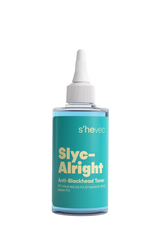
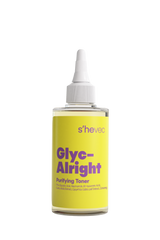
| Glyc-Alright | 7% glycolic acid + 2% niacinamide | 4th |
For a hydration-focused serum, Hydra Back Baby 8D Hyaluronic Acid Hydrating Serum is on this list; the application steps are in the guide how to use a hyaluronic acid serum. Glow Me Like You Do in the morning and Firm Baby Firm in the evening both contain panthenol as a supporting ingredient. For the hydration step, you can choose a serum or cream from our moisturisers.
Does panthenol have side effects, and who should take care?
Our sources do not include safety data that specifically examine reactions to panthenol, so we make no claim about how well it is tolerated. A reaction depends on the formula as a whole: according to the AAD, even a single ingredient, such as a preservative, can trigger an allergic reaction with redness, itching and swelling.
- Sensitive skin: Before first use, do a patch test on the inner forearm.
- If you react: gently wash the product off and do not use it again; if the reaction is severe, see a doctor.
- Open wounds, burns or irritated skin: s'hevec products are not designed for these situations; consult your doctor.
- Pregnancy, breastfeeding or an ongoing skin condition: in these products panthenol is not present on its own but alongside key actives such as niacinamide, glycolic acid or a vitamin C derivative; the decision depends on the formula as a whole. If you are pregnant or breastfeeding, or have a skin condition, consult your doctor before use.
Frequently asked questions
Are panthenol and dexpanthenol the same thing?
Dexpanthenol is the D form of panthenol (D-panthenol). Studies mostly use this name, whereas s'hevec labels simply say “Panthenol”.
Do panthenol and allantoin do the same job?
No, they are two different molecules; they appear together in Hydra Back Baby and Love In Blue This Time. We cover allantoin in our article what is allantoin.
Is an acid product gentler if it contains panthenol?
There are no data showing this. Although Glyc-Alright contains panthenol, the rule for use is the same: in the evening, a few times a week at first. AHAs can increase the skin's sensitivity to the sun: apply sunscreen every morning while using this product and for one week after you stop. The AAD notes that glycolic acid can cause irritation, especially on sensitive skin.
Is panthenol applied as a separate step?
No. At s'hevec, panthenol is not offered as a stand-alone product; it is part of the formula in 18 products. The order and frequency of application are determined by the directions for the product that contains it; no separate step is defined for panthenol.
Sources
- Proksch E et al. Topical use of dexpanthenol: a 70th anniversary article. J Dermatolog Treat. 2017.
- Gehring W et al. Effect of topically applied dexpanthenol on epidermal barrier function and stratum corneum hydration. Results of a human in vivo study. Arzneimittelforschung. 2000.
- Ferreira MS et al. Sensitive skin: Active ingredients on the spotlight. Int J Cosmet Sci. 2022.
- American Academy of Dermatology (AAD). How to test skin care products.
This content is for information only and does not replace medical advice. s'hevec products are cosmetic products and are not intended for medical treatment. It was prepared by the s'hevec Team on the basis of the s'hevec product data library and the sources listed above.


