


Readers who see “PHA” or “Gluconolactone” on a label usually have two questions: what is this ingredient, and does the product that contains it work like a peel? The answer to the second question depends on the ingredient's place in the formula.
In short: PHAs (polyhydroxy acids) are a group of acids that provide exfoliation similar to AHAs, are less associated with sensory irritation such as stinging and burning, and have additional humectant properties. Gluconolactone is an example of this group. At s'hevec it appears in the rinse-off Magic Foam Party foaming cleanser, which contains 2% niacinamide, and in Rice You Up, Rice Rice Baby and Rice Vibes Only, where it comes after the preservatives, with no stated concentration. It is not the key exfoliating active in any of the four products; there is no PHA peel in the range.
| INCI name | Gluconolactone, Lactobionic Acid |
|---|---|
| What it does | Exfoliation, moisture retention, support for barrier function |
| Who it is for | Depends on the product: the skin types recommended on the labels of Magic Foam Party and Rice Rice Baby include sensitive skin; begin by trying it on a small area |
| Using it with others | At s'hevec, combined with niacinamide in the same formula in all four products |
| At s'hevec | Magic Foam Party (rinse-off); Rice You Up, Rice Rice Baby and Rice Vibes Only (after the preservatives in the ingredient list, no stated concentration) |
What is PHA?
PHA is the collective name for acids that carry more than one hydroxyl group (“poly” means many). A 2004 review describes them as a new generation of AHAs: they provide exfoliation similar to AHAs but are less associated with the stinging and burning reactions that can limit the use of classic AHAs. They also have additional humectant (moisture-binding) properties, support the barrier function of the skin's upper layer, and most of them show antioxidant properties.
A product description uses the group name (“PHA”), while the ingredient list uses the INCI name: gluconolactone appears as Gluconolactone and lactobionic acid as Lactobionic Acid. The description of Magic Foam Party mentions “CICA and PHA”, while its ingredient list includes Gluconolactone from this group.
What does gluconolactone do?
Gluconolactone is a PHA that can bind water, and it supports the skin's moisture level. In a small study with healthy volunteers, a significant increase in skin moisture was measured after high-concentration gluconolactone solutions were applied in sessions. This finding relates to applications of the solutions; it cannot be transferred directly to the gluconolactone in a foaming cleanser, a serum or a mask.
What is the difference between PHA, AHA and BHA?
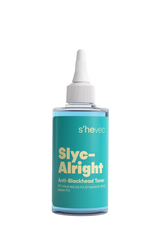
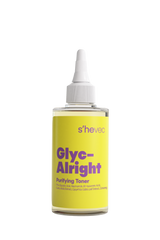
According to the 2004 review, PHAs differ from AHAs in causing less sensory irritation and in their additional humectant properties; all three are exfoliating acids. Our article on the difference between AHA and BHA compares those two acids. At s'hevec, exfoliation in the toner step is handled by Glyc-Alright (7% glycolic acid) and Slyc-Alright (2% salicylic acid).
Which s'hevec products contain PHA?
Gluconolactone appears in four products and is not the key exfoliating active in any of them. Three of these products, those with rice extract, are among the products for radiance.
- Magic Foam Party Foaming Face Cleanser: its key active is 2% niacinamide; CICA and PHA are the formula's other notable ingredients; because the foam is rinsed off, gluconolactone stays on the skin only briefly and does not replace an exfoliant or a peel. Directions are in our guide how to use a foaming face cleanser.
- Rice You Up Brightening Serum with Niacinamide and Rice Extract: its key actives are 5% niacinamide and 5% rice extract; Niacinamide is second in the ingredient list. Gluconolactone, by contrast, comes after the preservatives (Sodium Benzoate, Potassium Sorbate) in the ingredient list and has no stated concentration.
- Rice Rice Baby Brightening Rice Toner: here, too, gluconolactone comes after the same preservatives. The toner does not exfoliate.
- Rice Vibes Only Rice Peel-Off Mask: a peel-off mask with 3% rice extract and 3% niacinamide. Gluconolactone appears after the preservatives, with no stated concentration. Peeling off the dried film is not chemical exfoliation; it does not replace an acid toner or a peel serum.
Is there a s'hevec option if you are looking for a PHA peel?
No. The range has no peel or toner with PHA as its main exfoliant. If your skin is sensitive, first build a basic routine without exfoliants; once this routine feels comfortable, move on to an acid product, one product at a time. We list the steps in our guide to introducing active ingredients into sensitive skin care.
Does PHA have side effects, and who should take care?
A 2004 review reports that PHAs were found to be compatible with sensitive skin and that products containing PHAs are well tolerated; this finding relates to the formulas in the review, and reactions can still occur.
- Before first use, do a patch test on the inner forearm. If stinging, redness or itching persists, stop using the product.
- Do not apply to irritated skin, and avoid contact with the eyes.
- Magic Foam Party contains chamomile and yarrow. Do not use it if you have a known sensitivity to these plants.
- If you are pregnant or breastfeeding, or have a skin condition, consult your doctor before use.
Frequently asked questions
Does Rice Rice Baby contain PHA?
Its ingredient list includes gluconolactone; the product is not an exfoliant and contains no AHA or BHA for exfoliation. Its key actives are 5% rice extract and 3% niacinamide.
Can PHA be used every day?
How often you use it is set by the product's own directions, not by the PHA. Magic Foam Party and Rice Rice Baby are used morning and evening, Rice You Up in the morning or the evening; Rice Vibes Only is a mask applied 1–2 times a week.
Can PHA and niacinamide be used together?
Yes, the two are in the same formula in all four products. If your skin becomes sensitive when you use Rice Rice Baby and Rice You Up in the same routine, use one of the two products every other day.
Does PHA make the skin sensitive to the sun?
The sources we rely on contain no data on this. In a Rice You Up routine aimed at the look of dark spots, morning sunscreen is part of the routine regardless of PHA.
Sources
- Grimes PE et al. The use of polyhydroxy acids (PHAs) in photoaged skin. Cutis. 2004.
- Jarząbek-Perz S et al. Corneometric evaluation of skin moisture after application of 10% and 30% gluconolactone. Skin Res Technol. 2021.
This content is for information only and does not replace medical advice. s'hevec products are cosmetic products and are not intended for medical treatment. It was prepared by the s'hevec Team on the basis of the s'hevec product data library and the sources listed above.


